







Can You Install an EV Charger in a Rented Property in the UK? 2026 Guide
Last updated: April 2026
Yes, in many cases you can install an EV charger in a rented property in the UK. The important catch is that you will usually need written permission from the landlord, freeholder or managing agent before any work starts. In 2026, that answer matters more than ever because home charging grants are still available for many renters, but the rules changed from 1 April 2026.
If you rent a house with a driveway, rent a flat with a dedicated parking bay, or are trying to work out whether an on-street solution is possible, this guide explains what has changed, what permissions you need, which charger types make the most sense, and what landlords need to know now.
It also covers one of the biggest updates for 2026: private renters can still get help with the cost of a home charger in the right circumstances, but the live grants are now more targeted than many older guides suggest.

Can tenants install an EV charger in a rented home?
Usually, yes. There is no general rule that says tenants can never install an EV charger, but in practice you should expect to need written approval before any installation goes ahead. A charger is not the same as plugging in an appliance. It usually involves fixed electrical work, drilling, cabling and a permanent change to the property, so most tenancy agreements will require the landlord’s consent.
That applies whether you are renting a house, a flat with its own parking space or a rural property with a private drive. If the parking space is communal, leasehold or managed by a third party, you may also need consent from the freeholder or management company, not just the landlord.
The legal position in 2026
For most tenants, the practical position is straightforward. You can ask to install a charger, but you should not assume you can arrange it unilaterally. Check the tenancy agreement for any clause covering alterations, electrical work or external fixtures. Even if the agreement is silent, getting approval in writing is still the safest route.
It is also sensible to agree what happens when the tenancy ends. Some tenants pay for the charger and leave it in place. Others want the option to remove it professionally. The cleaner this is in writing from the outset, the easier it is to avoid a dispute later.
Landlord consent is the key step
Before you book an installation, you will usually need:
- written approval from the landlord or managing agent
- confirmation of who owns the charger once it is installed
- agreement on who pays for the unit and installation
- clarity on whether the charger stays or can be removed at the end of the tenancy
- confirmation that a qualified installer will carry out the work
Landlords are often more open to the idea when the proposal is presented properly. A well-installed EV charger can make a property more attractive to current and future tenants, especially where off-street parking already exists.
How to ask for permission and improve your chances
If you want a quick yes rather than a long delay, make the proposal easy to approve. A short, practical request works better than a vague one.
- Check the tenancy agreement first. Look for wording around alterations, fixtures, cabling or electrical works.
- Explain exactly what you want installed. Include whether the charger is tethered or untethered, where it will be positioned and which parking space it will serve.
- Show that safety has been considered. Explain that the work will be carried out by a qualified installer using compliant equipment.
- Be clear on cost. In many cases the tenant pays, but some landlords will contribute if they see it as an upgrade that improves the property.
- Set out an end-of-tenancy plan. Say whether the charger will remain in place, be sold to the landlord or be removed professionally if agreed.
- Mention the grant position accurately. In 2026, support is still available for eligible renters, and this can make the proposal easier for a landlord to accept.
A good permission request should make it obvious that you are not asking for a risky DIY alteration. You are proposing a proper installation with a clear benefit and a written plan.
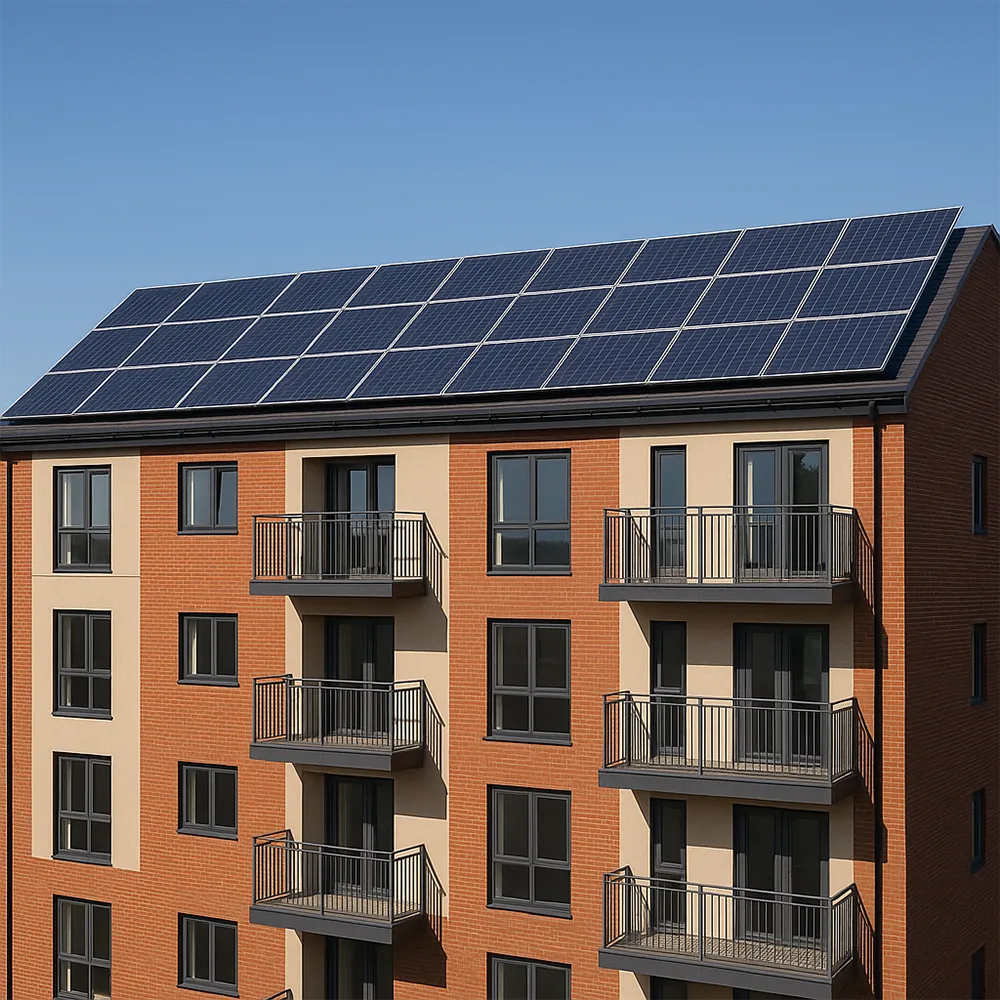
What if you rent a flat or live in a shared building?
Flats are often the most complicated rental EV charging cases, not because charging is impossible, but because there are more parties involved. If the parking area is communal or the cabling crosses shared space, you may need several permissions before work can begin.
You may need:
- the landlord’s written consent
- freeholder or management company approval
- confirmation that the bay you want to use is actually allocated to you
- a route for cabling that does not interfere with communal areas or fire safety requirements
- a metered power supply linked to the correct dwelling
In some leasehold or managed sites, the biggest issue is not the charger itself but the cable route, ownership of the parking bay or the rules around communal infrastructure. That is why flat installations often need a bit more planning at the start.
What if the rental only has on-street parking?
This is one of the most important 2026 changes. If you rent a home and do not have private off-street parking, there is now a clearer grant route for some households with on-street parking. However, it is not a simple case of running a cable across the pavement.
The live grant for households with on-street parking is aimed at people who own or rent the home they live in, do not have private off-street parking, and are installing a permanent cross-pavement charging solution alongside the chargepoint. Temporary cable covers or mats are not enough. You will also need the relevant permission from the local highways authority, and planning permission may also be required depending on the site.
So the answer for on-street renters in 2026 is no longer a flat no, but it is still more involved than a standard driveway installation. If your rental has no driveway, the right first step is to check whether your local authority permits a cross-pavement solution in your area before spending time on charger selection.
Other practical things to consider before installation
Even if the landlord is supportive, the property still needs to be suitable.
- Parking setup: A straightforward installation is easiest where there is a driveway, garage or dedicated bay.
- Electrical capacity: The installer will need to check whether the existing supply and consumer unit can support the charger safely.
- Cable route: Longer, more awkward runs can affect cost and whether the install is practical.
- Planning and building constraints: Off-street domestic chargepoints are often permitted development, but listed buildings, conservation areas and some positions near the highway can be different.
- Communal rules: Flats, apartment blocks and managed developments often need extra approvals.
The easiest installations are usually rented houses with private off-street parking and a clear cable route from the consumer unit to the charger position. The more shared or unusual the property setup is, the more upfront checks you should expect.
What installation options are available for renters?
Not every rental property needs the same charger setup. The right option depends on the parking arrangement, how long you expect to stay, whether you want the charger to look permanent, and how easy it would be to leave it behind if you move.
|
Installation type |
Best for | Main advantage |
|---|---|---|
| Wall-mounted untethered charger | Renters who want a tidy setup and easier end-of-tenancy flexibility | Clean look and no fixed cable on the wall |
| Wall-mounted tethered charger | Drivers who want maximum day-to-day convenience | Cable is always ready to use |
| Post-mounted charger | Properties where wall-mounting is awkward or impossible | Useful for detached parking spaces and awkward layouts |
Wall-mounted chargers
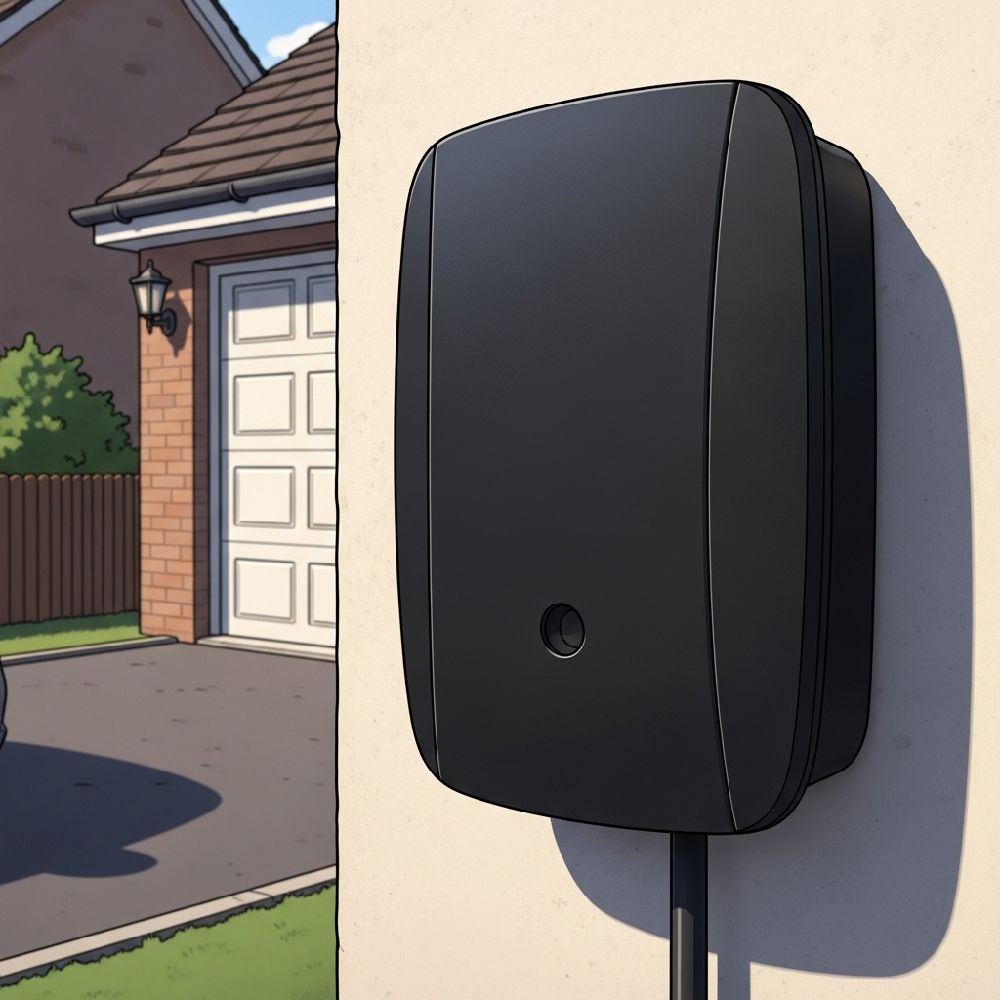
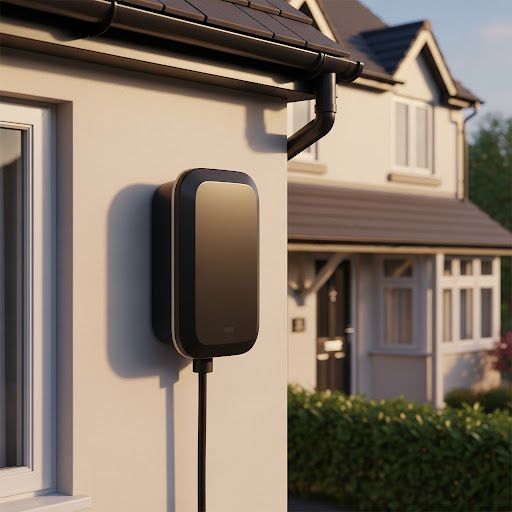
This is still the most common home charging setup. The charger is fixed to an external wall and hardwired back to the electrical supply. For rented homes with a driveway or private bay, it is usually the neatest solution.
If you want something discreet and flexible, an untethered model is often easier to live with in a rental setting because the charger itself looks cleaner and the charging cable is separate. One example worth comparing is the Easee One. You can also browse more options in our home EV chargers range.
Tethered vs untethered chargers
This is one of the most important decisions for renters.
- Tethered chargers have a built-in cable. They are convenient for daily use because you can plug in straight away.
- Untethered chargers use a separate cable. They often look tidier, feel slightly less permanent, and can be a better fit if you are thinking ahead to a possible move.
If convenience matters most, a tethered charger such as the Ohme Home Pro or Zappi GLO may suit you. If flexibility and a cleaner look matter more, an untethered option such as the Ohme ePod can make more sense.
Post-mounted or pedestal-mounted chargers
Where there is no suitable wall close to the parking space, a post-mounted charger can be a practical answer. This is more common where the car parks away from the house, where the wall position is awkward, or where the parking arrangement makes a free-standing unit cleaner and safer.
These installations can work well in rental settings, but they are rarely the cheapest because trenching or extra groundwork may be needed. They also still count as a fixed installation, so consent is still required.
Solar-compatible smart chargers
If the rental property already has solar panels, or the landlord is improving the property more broadly, a charger with good smart controls can make the setup more useful. Chargers with app control, scheduled charging and tariff-aware features help renters make the most of cheaper overnight electricity and any available solar generation.
Examples worth comparing include the Zappi GLO, Ohme Home Pro and Hypervolt Home 3 Pro.
What does it cost to install an EV charger in a rented property?
There is no single national price because every installation depends on the cable run, the charger chosen, the distance from the consumer unit, whether the install is wall-mounted or post-mounted, and whether any electrical upgrades are needed.
That is why the best way to explain cost in a rental context is by showing what changes the quote.
- Straightforward driveway install: usually the simplest and least disruptive option
- Longer cable runs: can increase labour and materials
- Post-mounted installs: often cost more because of groundwork
- Older properties: may need additional electrical work
- Flats and communal sites: can involve surveys, permissions and more complex routing
For most renters, the main question is not just the headline price, but who pays and whether the cost is worth it over the expected length of the tenancy. If you are likely to stay for several years, home charging can still be worthwhile even where you are funding the installation yourself.
Can renters still get a government grant in 2026?
Yes. In 2026, eligible private renters can still get help with the cost of installing a home charger through the EV chargepoint grant for renters or flat owners.
From 1 April 2026, the maximum grant rises to up to £500 per socket, or 75% of the purchase and installation cost if that is lower. This is one of the most important updates from the old 2025 position.
In broad terms, the grant is aimed at people who:
- rent a residential property in the UK, or own and live in a flat
- have dedicated private off-street parking
- are installing an eligible chargepoint
- use a qualified installer authorised for the scheme
- meet the vehicle and property eligibility rules in the current government guidance
New applications for this grant moved to the government’s Find a Grant service from 1 April 2026, so it is worth checking the latest application process before you commit. For the official route, see the government guidance for renters or flat owners.
What if you do not have private off-street parking?
If you are a renter without a driveway, the domestic grant picture is more limited, but it is not completely closed off. In the right circumstances, the grant for households with on-street parking may apply where a permanent cross-pavement solution is being installed alongside the chargepoint.
This route is more complex because local authority permissions matter, and not every council supports the same approach. It is best treated as a specialist route rather than a standard home charger install.
Why smart tariffs matter even more for renters
Renters usually pay their own electricity bill, so the cost of each kWh matters. A smart charger helps because it can schedule charging for cheaper periods, reduce unnecessary peak-time use, and make it easier to track consumption.
That does not mean you have to pick the most expensive charger on the market. It means it is worth choosing one with sensible software, scheduling and usage visibility. For many renters, that matters just as much as the physical installation itself.
EV tariffs change regularly, so it is better to focus on chargers that can work well with time-of-use pricing rather than relying on any single tariff staying the best option for years.
Landlords and property managers: what changed in 2026?
If you are a landlord or property manager, EV charging is still worth taking seriously. It is not mandatory in every rental situation, but it is becoming a more visible part of what tenants look for, especially where the property already has parking.
Why landlords are still installing chargers
- It can make the property more attractive to current and future tenants.
- It can help retain tenants who already drive an EV or expect to switch soon.
- It is a practical upgrade rather than a cosmetic one.
- It can future-proof properties with off-street parking.
The funding position for landlords in 2026
This is the section that needed the biggest update from the older version of the article.
From 1 April 2026, the residential landlord chargepoint grant remains open and rises to up to £500 per socket for eligible applications.
However, two other landlord-related grants are no longer open to new applications:
- the commercial landlord chargepoint grant closed to new applications on 31 March 2026
- the residential landlord infrastructure grant closed to new applications on 31 March 2026
That means landlord content written for 2025 is often out of date unless it clearly separates the live residential landlord chargepoint grant from the schemes that ended.
For the current official position, landlords can check the government guidance for landlord grants.
Who pays for the charger in a rental property?
There is no single rule. In practice, there are three common arrangements:
- Tenant pays: common where the tenant wants the charger urgently and expects to stay long enough to benefit.
- Landlord pays: more likely where the landlord wants to improve the property and market it as EV-ready.
- Shared cost: a practical middle ground, especially where the landlord keeps the charger in place after the tenancy.
Whatever arrangement you choose, put it in writing. The agreement should cover payment, ownership, electricity billing and what happens at the end of the tenancy.
Practical points for landlords and agents
- Use a qualified installer and keep the paperwork.
- Make sure the charger is linked to the correct meter where the tenant pays for usage.
- For communal or multi-unit sites, check rights over bays, cable routes and shared spaces.
- Do not assume older grant pages are still current.
- Think beyond the first install if the site may need more charging later.
Costs, practicalities and who pays in a rental EV charger install
Once the landlord has agreed, most rental EV charger projects come down to a few practical decisions.
1. Installation cost
A straightforward wall-mounted charger is usually simpler than a post-mounted install or a flat installation with a long cable route. Older properties, more complex wiring routes and civil works can all add to the final price.
2. Grant eligibility
For renters, the main live support route in 2026 is the EV chargepoint grant for renters or flat owners. For landlords, the live support route is the residential landlord chargepoint grant. The older landlord infrastructure route is no longer open to new applications.
3. Electricity billing
In most cases, the charger should be connected to the meter for the person who is actually paying for the energy. If electricity is included in the rent, a smart charger with usage monitoring becomes even more useful because it can help separate charging behaviour from the rest of the household demand.
4. Insurance and liability
A professionally installed charger is a standard fixed electrical installation, but it is still worth checking that the landlord’s buildings insurance and the tenant’s contents or vehicle insurance arrangements are appropriate. This is especially important in higher-value properties or shared parking settings.
5. End of tenancy
You should decide this before installation, not after. The usual options are:
- the charger stays with the property
- the landlord buys it from the tenant
- the tenant removes it professionally and makes good any agreed remedial work
In many cases, leaving the charger in place is the simplest outcome, especially where the property is likely to benefit from it for future lets.
So, can you install an EV charger in a rented property in the UK in 2026?
Yes, often you can. The main requirements are usually practical rather than ideological: you need the right parking setup, the right permissions and a proper installation plan.
If you rent a property with private off-street parking, the process is often much more achievable than people assume. If you rent a flat or only have on-street parking, the project can still be possible, but permissions and site specifics matter much more.
The 2026 update also makes one thing clear: grant support for renters is still available in the right circumstances, and that makes home charging a realistic option for more tenants than many old guides suggest.
If you are comparing chargers, start with our best EV charger for home guide or browse our best EV chargers in the UK for 2026. If you want help choosing a charger or planning an installation for a rental property, visit our EV charger installation page or contact LAMPS.