







EV Charging and Solar for Golf Clubs | Revenue and Energy Savings
Last updated: 28 April 2026
Golf clubs are always looking for practical ways to improve revenue, reduce running costs and add value for members and visitors. Two of the strongest opportunities today are commercial EV charging and solar power. For the right site, these upgrades can help a club make better use of its car park, cut electricity spend and support a more future-ready visitor experience.
The combination makes particular sense for golf clubs. Visitors often stay on site for several hours, which suits workplace and destination EV charging well. At the same time, many clubhouses, maintenance buildings and cart sheds have roof space that may be suitable for solar panels. Used together, EV charging and solar can help a club create a more useful site for members, guests and events, while also improving control over energy use.
LAMPS supplies the products that sit behind these projects, from commercial EV chargers and charger posts to solar panels, solar inverters, solar batteries and solar mounting systems. If you are exploring a project for your club, we can help you compare the main options and build a sensible product shortlist.
Why EV Charging Makes Sense for Golf Clubs
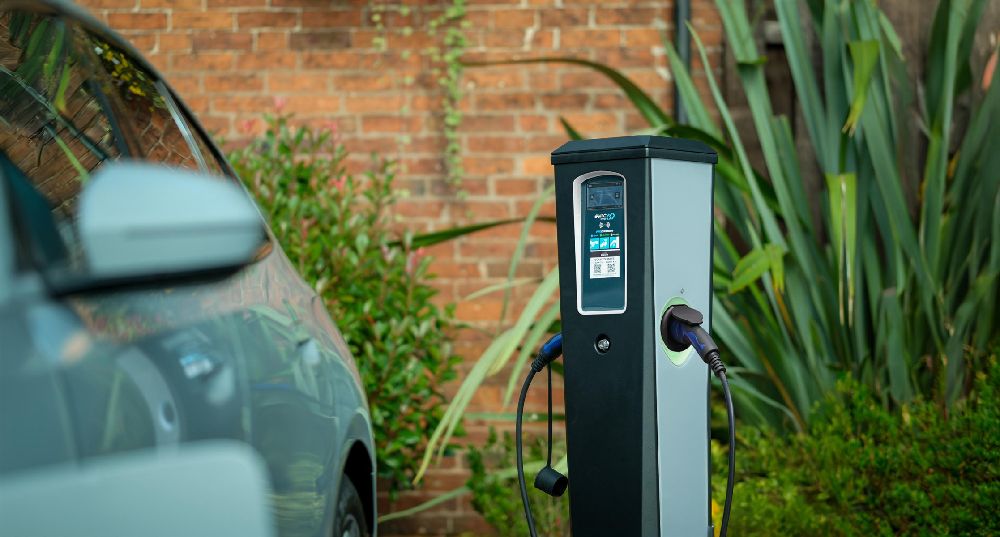
Golf clubs are well suited to destination charging because visitors usually spend a meaningful amount of time on site. A round of golf, time in the clubhouse, practice facilities, meetings and events all create dwell time that can work well with commercial AC charging. That makes the golf club car park more than just a parking area. It can become a useful amenity for members, visitors and event guests.
For many clubs, the first benefit is practical rather than technical. EV drivers are more likely to view a venue as convenient if they can charge while they are already there. That can improve the overall visitor experience and reduce the chance of drivers choosing another venue simply because charging is easier elsewhere.
It can also create a new income stream. If the club decides to offer paid charging, those bays may begin to generate revenue from time that cars are already parked on site. Some clubs may choose to keep charging exclusive to members and guests. Others may prefer to open selected bays more widely, depending on site access, staffing and how the club wants the car park to operate.
Commercial EV Charging Can Support New Revenue
Commercial EV charging is not just about adding a modern extra to the car park. For the right golf club, it can become part of the wider commercial offer.
That may happen in several ways:
- Paid charging for visitors: Clubs can choose to charge non-members or event guests for electricity used on site.
- Member charging as a retention benefit: Some clubs may prefer to offer favourable charging access to members as part of the overall club experience.
- Longer dwell time in the clubhouse: A visitor whose car is charging may be more likely to stay for food, drinks or extra time on site.
- Added appeal for events and corporate days: Charging can be a useful selling point for venues hosting business events or group bookings.
Not every club will use charging in the same way. A members’ club in a quieter location may have different priorities from a busier destination venue or a club near a strategic road route. The important point is that EV charging can be shaped around how the club already operates, rather than treated as a one-size-fits-all add-on.
What Type of EV Chargers Suit a Golf Club?
For most golf clubs, the starting point is a commercial AC charger rather than a rapid motorway-style unit. That is because golf club charging is usually based on dwell time rather than very short stays. In many cases, a visitor is parked for long enough that a well-chosen commercial AC charger is a sensible fit.
Features that are often worth considering include:
- Multiple sockets: Helpful where several visitors may want to charge at the same time.
- Pedestal or bollard mounting: Often useful in open car parks where wall mounting is not practical.
- Access control: Important if the club wants different rules for members, visitors or staff.
- Payment options: Useful for clubs planning to monetise charging or simplify guest use.
- Durable outdoor construction: Essential for exposed car park environments.
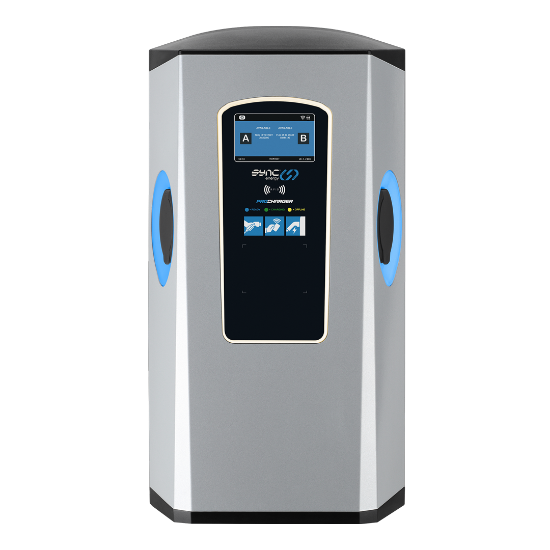
LAMPS supplies a wide range of commercial EV chargers, including solutions such as the Sync Energy Pro Charger twin wall-mounted unit with payment terminal, the Sync Energy Pro Charger twin bollard unit with payment terminal, and the Easee Charge 22kW commercial charger. We also stock supporting products such as charger posts, EV signage, EV cabling and EV circuit protection.
That does not mean every club needs payment terminals or higher-power units straight away. In many cases, it makes more sense to start with a simpler setup that fits current demand and leaves room to expand later.
Solar for Golf Clubs: Lower Energy Costs and Better Use of Roof Space
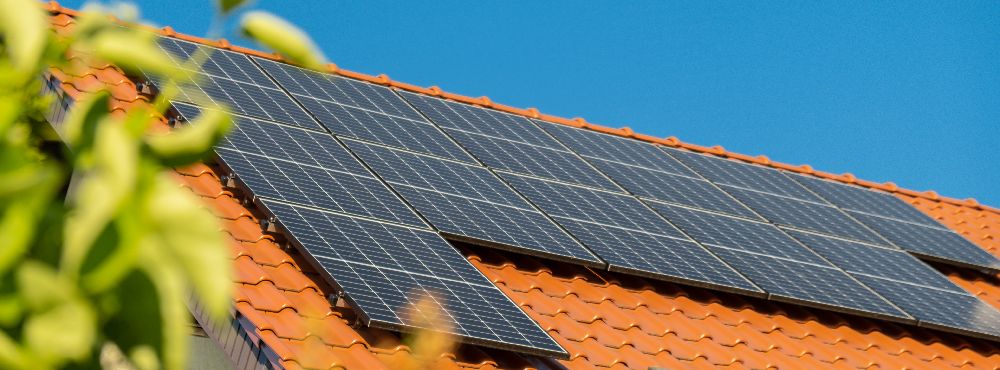
Solar can be just as attractive as EV charging for golf clubs, especially where the clubhouse or other buildings have suitable roof space and meaningful daytime electricity demand. Clubhouses, bars, kitchens, changing areas, pro shops, offices and maintenance buildings all contribute to the site’s energy use. Solar can help offset part of that usage and reduce reliance on imported grid electricity during the day.
For many clubs, the biggest appeal is simple: solar may help reduce ongoing electricity costs. The amount depends on the system size, the site’s daytime consumption, the roof layout and how much of the generated power the club can use on site. A well-matched system can make a noticeable difference to how much electricity is bought from the grid during daylight hours.
Solar can also support the club’s wider sustainability story. That may matter for member communications, local reputation, corporate events and the club’s long-term planning. For venues that already care about land management and stewardship, solar is often a natural extension of that approach.
What Solar Equipment Might a Golf Club Need?
A solar project for a golf club usually involves more than just the panels. The wider system may include inverters, mounting equipment, metering, monitoring and, in some cases, battery storage. The right setup depends on the building, the roof type, the available space and the energy goals for the site.
LAMPS can support projects with products across the wider solar system, including:
- Solar panels from recognised brands
- Solar inverters for different system types
- Solar batteries where storage is part of the plan
- Solar mounting systems for different roof structures
- Optimisers and meters for wider system control and monitoring
If the club is considering storage as well as generation, battery options may help the site make better use of its own solar output rather than exporting more of it away. Whether that makes sense depends on the club’s consumption pattern and the wider system design.
Why EV Charging and Solar Work Well Together
For many golf clubs, EV charging and solar are strongest when viewed as part of the same site strategy rather than two separate upgrades. Solar may help reduce daytime import costs. EV charging can make the car park work harder. Together, they create a more joined-up energy and visitor offer.
There are several reasons that pairing the two can make sense:
- Better use of site infrastructure: One project can inform the other, especially when planning electrical capacity and future expansion.
- Clearer energy strategy: The club can look at charging demand and building demand together rather than in isolation.
- Stronger visitor proposition: The site becomes more useful to EV-driving members, guests and event organisers.
- A more future-ready facility: The club is better placed for changes in transport and energy use over time.
This does not mean every club should do both at once. Some may start with chargers, while others may begin with solar because roof space and electricity use make that the clearer first move. The right order depends on the site and the club’s priorities.
What Golf Clubs Should Consider Before Starting
Before any decision is made, it helps to work through the practical questions early. These usually matter more than the marketing claims around the products.
- How long do visitors typically stay? This affects the type of charging that makes sense.
- Is the car park easy to access for members only, guests, or the public? This shapes access and payment decisions.
- What electrical capacity is available on site? This affects how many chargers the club can support and how easy expansion may be.
- Which buildings have suitable roof space? This affects whether solar is realistic and how large a system may be appropriate.
- Does the club want a phased approach? Some sites may prefer to start small and expand later.
These points matter because the best commercial setup is rarely the one with the longest feature list. It is the one that matches the way the golf club actually operates.
How LAMPS Can Help Golf Clubs
LAMPS supports golf clubs by supplying the products that sit behind EV charging and solar projects, and by helping buyers compare the main options before they commit. That may involve looking at charger type, payment capability, mounting arrangements, inverter selection, battery compatibility or the wider materials needed for the installation.
We can help you source products across the project rather than treating each item in isolation. For EV charging, that may include chargers, posts, protection, signs and ancillaries. For solar, that may include panels, inverters, batteries, mounting and monitoring equipment.
If your club is reviewing options for a new project, the simplest next step is often to define what you want the system to achieve first. From there, it becomes much easier to compare products and decide whether the priority is revenue, cost reduction, member convenience or a combination of all three.
Ready to Explore EV Charging and Solar for Your Golf Club?
If your golf club is looking at commercial EV charging, solar panels or a combined project, LAMPS can help you build a more practical shortlist. We supply the products behind both types of installation and can help you compare the options that make sense for your site.
Start by exploring our commercial EV chargers, solar panels, solar inverters and solar batteries, or contact LAMPS to discuss your project.
Frequently Asked Questions
Are golf clubs a good fit for commercial EV charging?
Yes, many are. Golf clubs often have useful visitor dwell time, which can suit destination charging well. The best setup depends on the car park, the electrical capacity and whether the chargers are intended for members, guests or wider public access.
Can EV charging create revenue for a golf club?
It can. Some clubs choose to offer paid charging, which may create an additional income stream. The result depends on charger usage, pricing, site location and how the charging offer is managed.
Can solar panels reduce a golf club’s electricity costs?
They can help reduce daytime grid electricity use where the roof space, system design and on-site demand are a good match. The size of the benefit depends on the building, the usage pattern and how much of the generated power the club can use itself.
Should a golf club install EV charging and solar together?
Not always, but the two technologies often work well together. Some clubs may start with one and phase in the other later. The best approach depends on the site, the budget and the club’s priorities.
What products might a golf club need around the main system?
In addition to the main chargers or solar panels, projects often need posts, signage, circuit protection, cabling, mounting systems, inverters, batteries or metering. LAMPS can help you source the wider product set as well as the headline items.