







EV Chargers in Oxfordshire: Home, Workplace & School Guide | LAMPS
Last updated: 22 April 2026
If you are looking for EV chargers in Oxfordshire, the best option usually depends on five things: where the vehicle is parked, whether the charger is for a home or a multi-user site, whether the property has single-phase or three-phase power, whether smart tariff or solar integration matters, and how straightforward the installation route will be. LAMPS supplies home and commercial EV charging products, supporting accessories and installation guidance, with useful starting points for Oxfordshire buyers who are still comparing options.
If you already know you want installation as well as supply, begin with the LAMPS installation pages for Oxfordshire locations and next steps.
Start EV charger installation

What do Oxfordshire buyers usually need to compare first?
For most properties, the charger choice becomes much clearer once you start with the layout rather than the brand. A driveway in a newer development, a terrace in Oxford, a rural property with a longer cable run, a school car park, and a workplace with several drivers all point towards different priorities.
That is why the best Oxfordshire EV charger content should not just list products. It should help buyers answer practical questions early: do you want a tethered or untethered charger, do you need one socket or several, are you working with single-phase or three-phase power, and does the site need app control, load balancing or future expansion?
| Project type | What usually matters most | Useful starting points |
|---|---|---|
| Home driveway or dedicated bay | Daily convenience, cable reach, smart tariff compatibility and appearance | Home EV chargers, Ohme, Easee, Hypervolt |
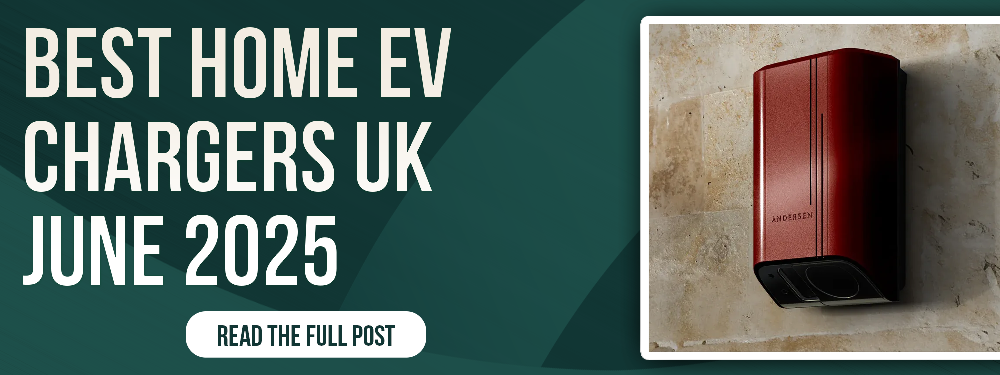
| Design-led home installation | Finish, neat cable management and a cleaner frontage | Andersen, Andersen Quartz |
| Rented home, flat or shared parking arrangement | Permissions, cable route, security and practical site access | EV chargers for rented homes, Contact us |
| Office, school, landlord or multi-user car park | User access, scalability, site layout, mounting and future expansion | Commercial EV chargers, Best commercial EV chargers, EV charger grants for schools |
Why Oxfordshire needs a broader EV charging guide
Oxfordshire is not one uniform charging market. Buyers in Oxford often think about visible frontages, shared parking or tighter access. Buyers in places such as Bicester, Didcot, Abingdon and Witney may be comparing chargers for driveways or newer developments. Rural properties around Wallingford, Thame, Chipping Norton and the villages in between may have longer cable runs, detached outbuildings or more unusual parking arrangements.
That variation matters because the right charger is not just the one with the most features. It is the one that works with the way the vehicle is actually parked, the route the cable needs to take, the electrical supply available on site, and whether the owner wants a simple daily routine or a more advanced setup built around off-peak charging, solar generation or future expansion.
Home EV chargers in Oxfordshire: what is worth comparing?
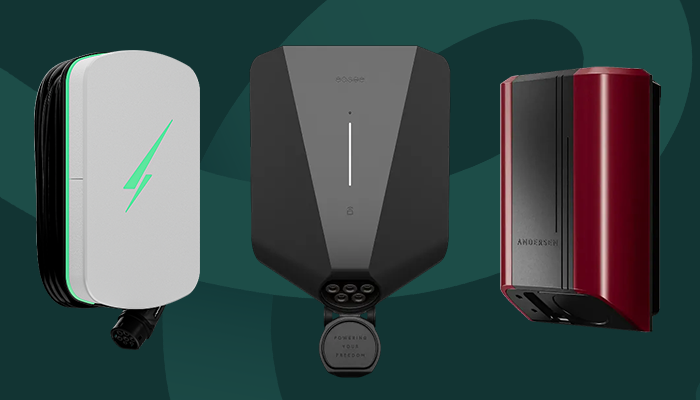
For most domestic buyers, the shortlist starts with well-known 7.4kW home chargers. The main comparison points are usually tethered versus untethered, app experience, tariff integration, solar potential, appearance and cable length.
Tethered vs untethered
Tethered chargers have a built-in cable. They often suit households with one regular parking position and owners who want the quickest everyday routine. You park, plug in and charge.
Untethered chargers use a socket instead of a fixed lead. They often suit buyers who prefer a tidier appearance, want flexibility if vehicle needs change, or do not want a cable visible on the wall all the time.
Popular Oxfordshire home charger starting points
- Ohme Home Pro for buyers who want a tethered charger to compare against other smart options.
- Ohme ePod for buyers who prefer an untethered alternative in the same wider brand family.
- Easee One for buyers researching compact untethered home charging.
- Hypervolt Home 3 Pro for buyers comparing longer tethered cable options and design-led home charging.
- Andersen Quartz untethered and Andersen Quartz tethered for buyers who care strongly about finish and appearance.
- myenergi Zappi GLO and the wider Zappi range for buyers comparing solar-focused charging options.
- Rolec EVO Smart for buyers who want another untethered home charger on the shortlist.
7kW, 22kW or DC rapid: what do the charging speeds actually mean?
One of the biggest points of confusion in EV charging content is speed. Buyers often hear 7kW, 22kW and rapid charging mentioned together even though they usually apply to different site types.
7.4kW home charging
This is the most common starting point for UK homes with single-phase supply. It is usually the default bracket for driveway charging and overnight top-ups.
22kW workplace and commercial AC charging
This is more relevant for three-phase sites such as offices, schools, fleet yards and commercial premises. It is not simply a better version of a home charger; it depends on what the site can actually support.
DC rapid charging
DC rapid units are aimed at very different use cases again, including more demanding public or commercial environments. They make sense only where the site, budget and user pattern justify them.
| Charging type | Usually suits | Example starting points |
|---|---|---|
| 7.4kW AC | Homes and smaller private installations | Home EV chargers |
| 22kW AC | Workplaces, schools, commercial premises and larger sites with suitable supply | Easee Charge 22kW, Rolec EVO 22kW |
| DC rapid | Higher-demand public or commercial charging environments | Rolec UltraCharge 30kW |
Commercial EV chargers for Oxfordshire businesses, schools and landlords
Not every EV charger project in Oxfordshire is a single domestic wall box. Schools, business parks, offices, managed residential sites, golf clubs, hospitality venues and landlord portfolios often need a different starting point altogether.
In these cases, the shortlist usually depends on how many users need access, whether charging should be wall-mounted or pedestal-mounted, whether the site wants one socket or twin outputs, and whether the owner expects the site to expand later. That is why a commercial article needs more than a list of products. It needs a framework for deciding which type of commercial charger belongs on the shortlist.
Commercial starting points worth comparing
- Easee Charge 22kW for sites researching modular commercial AC charging.
- Sync Energy twin 2x7.4kW wall mount for sites comparing twin-output options.
- Sync Energy twin 2x11kW wall mount for three-phase commercial comparisons.
- Rolec EVO 22kW for commercial fleet and site charging research.
- Commercial EV chargers and best commercial EV chargers for broader comparison work.
Schools and education sites
If the project is for a school or college, it helps to separate three questions: who will use the chargers, whether the site wants staff-only or wider access, and what funding or grant routes might currently be relevant. LAMPS already has a dedicated page on EV charger grants for schools, which makes a useful internal link for education-sector readers.
Golf clubs, leisure and hospitality sites
For leisure sites, the charging decision often overlaps with broader energy planning. If that is your use case, EV charging and solar for golf clubs is a relevant supporting page to strengthen internal topical coverage.
What else do you need besides the charger?
Strong EV charging content should not stop at the wall box itself. A real buying decision often includes the cable route, circuit protection, pedestals, load balancing and the smaller accessories that make an installation workable and tidy.
- EV cabling for power and data cable options.
- EV circuit protection for supporting protection components.
- EV ancillaries for the wider installation ecosystem.
- EV tower and single charger stand options for sites that need freestanding mounting.
- Easee Equalizer and Sync Energy single-phase load balancer kit for buyers comparing load management options.
Adding these internal links helps the page serve both consumers and trade readers. It also makes the article more useful to search engines and AI systems because it connects the main topic to the practical subtopics people often ask next.
Installation in Oxfordshire: where should you start?
If you want installation as well as supply, the simplest next step is to move from product research into location-specific installation pages. That is especially useful when the project involves longer cable runs, shared parking, unusual layouts or a commercial site.
Useful next steps include:
- EV charger installation for the main route in.
- Installation locations for place-based navigation.
- Thame installation, Bicester installation and Aylesbury installation for nearby local pages within the wider Oxfordshire cluster.
- EV charger installation cost guide if the priority is understanding the likely cost drivers before committing.
From an SEO and GEO point of view, this also helps the Oxfordshire page behave more like a pillar page: broad enough to capture county-wide intent, but connected to more specific installation and location pages for users who are further down the decision journey.
Smart tariffs, off-peak charging and solar integration
For a growing number of Oxfordshire buyers, the charger itself is only half the decision. The other half is how that charger will work with off-peak electricity, smart scheduling and future solar plans.
Smart tariff research
If off-peak charging matters, one of the most useful internal links is what EV chargers work with Octopus Intelligent Go. That query has strong search intent because it sits close to purchase and setup decisions. The wider best EV tariffs guide is another helpful next step.
Solar integration research
If the property already has solar panels, or the owner is planning solar later, it makes sense to factor that into the charger shortlist early. Buyers researching this angle may also want to read solar panels, solar panel systems for the home and, for local context, solar panels in Thame.
Useful model comparisons for smart and solar-minded buyers
- Ohme ePod vs Ohme Home Pro for one practical within-brand comparison.
- myenergi and Zappi for buyers exploring solar-oriented charging options.
- Hypervolt, Easee and Ohme for broader smart home charger comparison.
How to choose the right EV charger in Oxfordshire
If you want a simple shortlist process, use this order:
- Start with where the vehicle parks. Measure the real parking position, not the ideal one.
- Decide whether the project is domestic or multi-user. Home and commercial charging should not be treated as the same category.
- Check the electrical supply. This matters especially when comparing 7.4kW and 22kW charging.
- Choose tethered or untethered. Think about appearance, cable handling and day-to-day routine.
- Review tariff and solar priorities. Decide whether app control, scheduling or solar integration changes the shortlist.
- Think about the installation route. Distance, walls, boundaries and consumer unit location often matter more than brand preference.
- Only then compare models. At that point the shortlist usually becomes much smaller and more useful.
Common mistakes Oxfordshire buyers make
- Starting with the brand instead of the site layout. The property usually decides the shortlist first.
- Assuming all home chargers solve the same problem. A neat untethered unit and a long-cable tethered unit may suit very different households.
- Ignoring power supply constraints. Not every site is ready for the same charging speed.
- Leaving permissions too late. Flats, schools, shared parking and landlord sites often need more planning.
- Forgetting about accessories. Cables, protection, load balancing and mounting can change the final installation just as much as the charger itself.
- Not linking the decision to the next question. Good EV content should help buyers move from “which charger?” to “what does installation involve?” and “what else do I need?”
Ordering online and building a stronger Oxfordshire topic cluster
For SEO, this page works best when it does two jobs at once. First, it needs to answer the broad county-level query around EV chargers in Oxfordshire. Second, it needs to move users naturally into narrower pages that match buyer stage and intent.
That means linking this page to the right supporting content rather than forcing every answer into one article. Strong next-step links include:
- Best home EV chargers for buyers in comparison mode.
- Best EV chargers in the UK for broader research intent.
- Commercial EV chargers for offices, schools and landlord projects.
- Installation locations for local implementation intent.
- Octopus Intelligent Go compatibility for tariff-led research.
Areas and use cases this Oxfordshire guide should help with
This page is designed to be useful whether the reader is in Oxford, Banbury, Bicester, Didcot, Abingdon, Witney, Wallingford, Thame or elsewhere in the county. It should also be useful across different buyer types: homeowners, electricians, schools, landlords, offices, hospitality venues and other commercial sites.
The goal is not to make identical promises to every location. It is to give readers a county-wide guide that is specific enough to be useful, while linking them towards the right product, installation or comparison page for their next step.
Frequently asked questions
What is the best EV charger for a home in Oxfordshire?
There is no single best charger for every property. For most homes, the right answer depends on parking layout, whether you want tethered or untethered charging, how important smart tariff integration is, and whether solar matters now or later. A good starting point is home EV chargers together with best home EV chargers.
Should I choose tethered or untethered charging?
Tethered is often easier for daily use because the cable is already attached. Untethered often looks neater and can give more flexibility if the vehicle changes later. Buyers commonly compare Ohme Home Pro, Ohme ePod and Easee One.
Do I need a 7.4kW charger or a 22kW charger?
Most homes begin with 7.4kW charging on single-phase supply. 22kW charging is more relevant for suitable three-phase commercial sites such as offices, schools and other larger premises. Start with commercial EV chargers if the project is not a standard home installation.
Which chargers are worth looking at for Octopus Intelligent Go?
A strong next step is this guide to chargers that work with Octopus Intelligent Go. Buyers also often compare brands such as Ohme, Easee, Hypervolt and myenergi.
What if the property is rented or has shared parking?
Those projects usually need more planning around permissions, cable route and practical access. Start with EV chargers for rented homes or contact LAMPS.
Do schools and commercial sites need different chargers from homes?
Usually yes. Multi-user sites often need a different approach to charging speed, mounting, access and future expansion. Start with commercial EV chargers, best commercial EV chargers and EV charger grants for schools if the project is education-related.
Where do I start if I want installation in or near Oxfordshire?
Start with EV charger installation or use the installation locations page. For nearby local routes, see Thame, Bicester and Aylesbury.
Order EV chargers in Oxfordshire
Whether you are comparing home chargers for a driveway, reviewing school or workplace charging, or planning a broader commercial installation, LAMPS gives you a clearer route through the decision. Start with the right category, move into the right comparison pages, and then use the relevant installation page when you are ready.
- Shop home EV chargers
- Shop commercial EV chargers
- Compare the best home EV chargers
- Compare the best commercial EV chargers
- See Octopus Intelligent Go compatible chargers
- Start EV charger installation
- Contact LAMPS