







evec vecGO 2.0 EV Chargers: Complete VEC01-N to VEC04-N Buying Guide
The evec vecGO 2.0 range is the latest generation of evec wall-mounted smart EV chargers. It comprises four models: the 7.4kW single-phase VEC01-N and VEC03-N, plus the 22kW three-phase VEC02-N and VEC04-N. Buyers can choose between an untethered universal socket or a fixed 5m Type 2 charging cable.
The new range replaces the previous VEC01, VEC02, VEC03 and VEC04 chargers. Changes include a redesigned mounting system, a compact 270mm by 225mm enclosure, five available finishes, updated smart-charging functionality, solar ECO mode, RFID access and OCPP 1.6J communication.
LAMPS supplies all four vecGO 2.0 models. This guide compares the complete range, explains what has changed and helps homeowners, electricians, EV installers, facilities managers and commercial buyers select the correct version.
Product specifications and prices last checked: 26 June 2026. Prices can change, so confirm the current price on the linked product page before ordering or quoting.
The complete evec vecGO 2.0 range
The four vecGO 2.0 chargers use the same basic buying logic. First decide whether the installation requires a 7.4kW single-phase charger or a 22kW three-phase charger. Then choose between an untethered socket and a tethered 5m Type 2 cable.
| Model | Maximum output | Electrical supply | Connection | Best suited to | LAMPS price |
|---|---|---|---|---|---|
| VEC01-N | 7.4kW | Single-phase | Untethered universal socket | Homes wanting cable flexibility | £219.95 ex VAT |
| VEC02-N | 22kW | Three-phase | Untethered universal socket | Shared workplace or commercial bays | £269.95 ex VAT |
| VEC03-N | 7.4kW | Single-phase | Fixed 5m Type 2 cable | Regular home charging | £284.00 ex VAT |
| VEC04-N | 22kW | Three-phase | Fixed 5m Type 2 cable | Assigned workplace and fleet bays | £455.00 ex VAT |
Quick recommendation: choose VEC01-N for an untethered home charger, VEC03-N for a tethered home charger, VEC02-N for an untethered three-phase commercial charger or VEC04-N for a tethered three-phase workplace or fleet charger.
What is vecGO 2.0?
vecGO 2.0 is the second generation of evec’s compact wall-mounted AC charger platform. It covers domestic, workplace and light-commercial charging through four clear configurations rather than requiring buyers to navigate a large number of similar variants.
The -N suffix is important. It identifies the new-generation model and separates it from the outgoing VEC charger with the same first four characters. For example, VEC01-N is the new vecGO 2.0 charger, while VEC01 refers to the previous-generation product.
| Previous model | vecGO 2.0 replacement | Power | Cable format |
|---|---|---|---|
| VEC01 | VEC01-N | 7.4kW single-phase | Untethered |
| VEC02 | VEC02-N | 22kW three-phase | Untethered |
| VEC03 | VEC03-N | 7.4kW single-phase | 5m tethered Type 2 |
| VEC04 | VEC04-N | 22kW three-phase | 5m tethered Type 2 |
All four models offer Wi-Fi connectivity, evec app control, charging schedules, RFID authorisation, plug-and-charge operation, OCPP 1.6J, a three-colour LED indicator, solar ECO mode and support for dynamic load management.
The standard finish is Shadow Black. Interchangeable covers are also available in Anthracite Grey, Deep Red, Sage Green and Moonlight Cream. This gives installers, homeowners and developers five finish options without changing the underlying charger specification.
What is new compared with the old evec range?
The most practical difference is the redesigned installation system. evec states that vecGO 2.0 can be installed up to 50% faster than the previous model. The manufacturer attributes this to a revised mounting arrangement, an integrated spirit level, fewer drilling steps, more straightforward cable routing and a simplified wiring process.
This is a manufacturer comparison rather than a guaranteed fitting time. Actual installation duration still depends on the cable route, wall construction, consumer unit, earthing arrangement, supply capacity, CT requirements and commissioning work.
| Area | Previous VEC generation | vecGO 2.0 generation | Practical effect |
|---|---|---|---|
| Model references | VEC01 to VEC04 | VEC01-N to VEC04-N | Makes the latest hardware easier to identify |
| Mounting | Previous enclosure and mounting system | Redesigned modular mounting arrangement | Intended to reduce fitting steps |
| Levelling | Installer uses separate measuring and levelling tools | Integrated spirit level | Helps position the mounting assembly |
| Wiring and cable entry | Previous internal layout | Revised wiring and cable-routing arrangement | Designed to reduce on-site complexity |
| Enclosure | Outgoing VEC design | 270 x 225 x 103mm enclosure | Consistent footprint across the range |
| Finish | More limited visual choice | Five interchangeable colour options | Better fit for different properties and developments |
| Status display | Previous indicator arrangement | Three-colour LED halo-logo indicator | Clear local charging and fault indication |
| Solar | Model-dependent functionality | Solar ECO mode across vecGO 2.0 | Can respond to measured surplus generation |
| Access control | Previous RFID and app platform | App, plug-and-charge and RFID access | Suits both private and controlled-use locations |
| Backend communication | Dependent on previous model configuration | OCPP 1.6J | Supports compatible charge point management platforms |
| Smart rewards | Not the main focus of the original range | vecFLEX-ready | May support eligible grid-services participation |
VEC01 vs VEC01-N
Both products are 7.4kW single-phase untethered chargers, but VEC01-N is the new vecGO 2.0 version. The -N model uses the redesigned enclosure, updated mounting arrangement, interchangeable covers and current smart-charging platform.
Buyers specifically searching for the latest evec home EV charger should check that the product title and SKU state VEC01-N. A listing that only states VEC01 may refer to the outgoing charger.
VEC03 vs VEC03-N
VEC03 and VEC03-N are both single-phase tethered chargers with a Type 2 lead. VEC03-N is the vecGO 2.0 replacement and combines the new enclosure with a fixed 5m TPU charging cable, Wi-Fi, RFID, OCPP 1.6J and solar ECO mode.
The same distinction applies to VEC02 versus VEC02-N and VEC04 versus VEC04-N. The letter N is not a minor packaging reference; it identifies the replacement generation.
Which vecGO 2.0 charger should you choose?
VEC01-N: 7.4kW untethered home EV charger
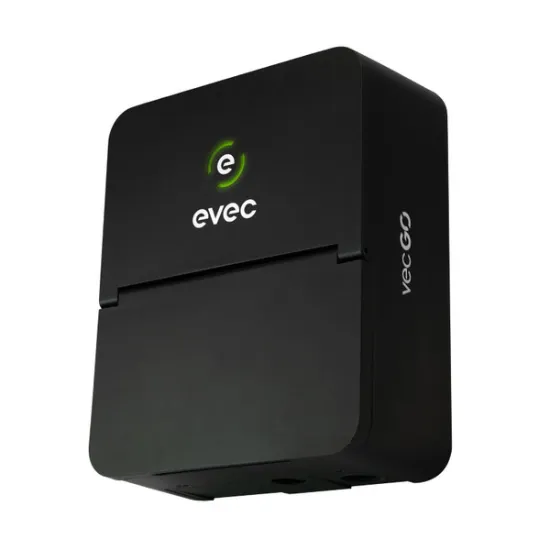
The evec VEC01-N is the entry point to the vecGO 2.0 range. It provides up to 7.4kW from a suitable 220–240V single-phase supply and uses a universal charging socket rather than a permanently attached vehicle cable.
This format is likely to suit many UK homes. The driver selects a separate Mode 3 cable according to the vehicle inlet, required current and parking position. A current Type 2 vehicle would normally use a Type 2-to-Type 2 cable. A compatible Type 1 vehicle can use an appropriate Type 2-to-Type 1 lead.
| Maximum output | 7.4kW at up to 32A |
|---|---|
| Supply | 220–240V single-phase, 1P+N+PE |
| Connection | Untethered universal socket |
| Smart control | Wi-Fi, evec app, RFID and OCPP 1.6J |
| Solar | Solar ECO mode with suitable metering |
| Load management | Supported with compatible CT equipment |
| Protection | AC 30mA, DC 6mA and open PEN protection |
| Environmental rating | IP55 and IK10 |
| Dimensions | 270 x 225 x 103mm |
| Weight | Approximately 2.6kg |
Why choose it: the removable-cable arrangement keeps the wall clear when the charger is not in use and provides more flexibility if the household changes vehicle.
Consider before choosing: no vehicle charging cable is supplied with an untethered charger. The correct lead must be added to the job, and the user must connect and store it separately.
Best for: single-phase homes, drivers who keep a cable in the vehicle, households with different vehicle inlet requirements and buyers looking for a competitively priced smart home EV charger.
VEC02-N: 22kW untethered commercial EV charger
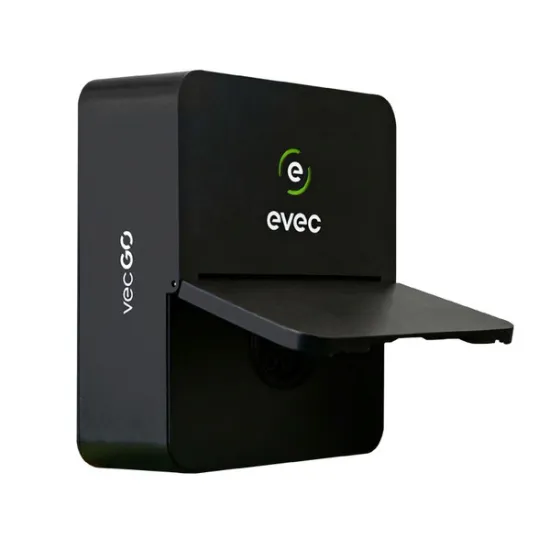
The evec VEC02-N is the three-phase socketed model. It provides up to 22kW from a suitable 380–415V three-phase supply and is aimed at workplaces, commercial properties, shared parking and higher-capacity residential installations.
The untethered socket makes sense in a shared bay because each driver can connect the appropriate charging lead. It also avoids leaving a fixed cable exposed or trailing when the charger is not being used.
| Maximum output | 22kW at up to 32A per phase |
|---|---|
| Supply | 380–415V three-phase, 3P+N+PE |
| Connection | Untethered universal socket |
| Smart control | Wi-Fi, evec app, RFID and OCPP 1.6J |
| Solar | Solar ECO mode with suitable metering |
| Load management | Supported with compatible three-phase sensing |
| Protection | AC 30mA, DC 6mA and open PEN protection |
| Environmental rating | IP55 and IK10 |
| Dimensions | 270 x 225 x 103mm |
| Weight | Approximately 3.15kg |
Why choose it: it combines a 22kW three-phase output with removable-cable flexibility, RFID access and OCPP communication.
Consider before choosing: a 22kW charger does not make every car charge at 22kW. Charging power is limited by the vehicle’s onboard AC charger, the cable, the site capacity and the commissioned charger setting. Many vehicles accept 7.4kW or 11kW AC even when connected to a 22kW charge point.
Best for: shared workplace bays, commercial properties, drivers bringing their own cable and projects requiring a compact OCPP EV charger.
VEC03-N: 7.4kW tethered home EV charger
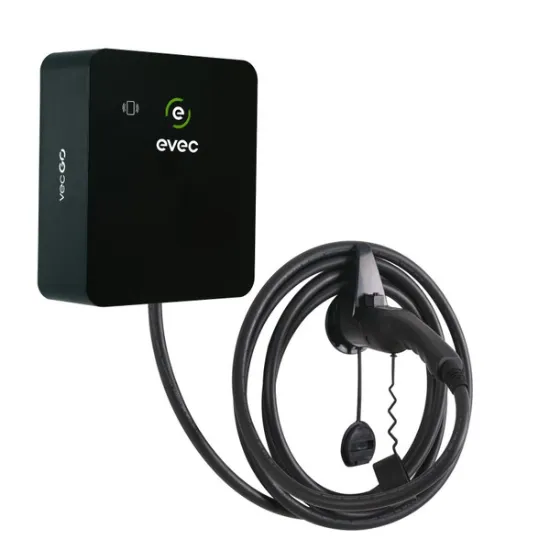
The evec VEC03-N is the tethered home-charging model. It provides up to 7.4kW from a single-phase supply and includes a permanently attached 5m TPU cable with a Type 2 vehicle connector.
Its main advantage is daily convenience. The user does not have to remove a separate cable from the boot or garage before every charge. The connector remains with the charger and is ready to plug into the vehicle.
| Maximum output | 7.4kW at up to 32A |
|---|---|
| Supply | 220–240V single-phase, 1P+N+PE |
| Connection | Fixed 5m TPU cable with Type 2 plug |
| Smart control | Wi-Fi, evec app, RFID and OCPP 1.6J |
| Solar | Solar ECO mode with suitable metering |
| Load management | Supported with compatible CT equipment |
| Protection | AC 30mA, DC 6mA and open PEN protection |
| Environmental rating | IP55 and IK10 |
| Dimensions | 270 x 225 x 103mm |
| Weight | Approximately 4.55kg |
Why choose it: it offers a simple plug-in routine for a household that regularly charges the same Type 2 vehicle.
Consider before choosing: measure the cable route before ordering. The vehicle should be parked in its usual position, and the route should account for the charging-port location. Avoid planning for the cable to pass across wheels, doors or a principal pedestrian route.
Best for: single-phase homes, repeat Type 2 charging and customers who prefer a fixed cable to an untethered socket.
VEC04-N: 22kW tethered commercial EV charger
The evec VEC04-N combines a maximum 22kW three-phase output with a fixed 5m Type 2 cable. It is intended for workplaces, fleets, commercial premises and suitable three-phase properties where the bay will repeatedly serve compatible vehicles.
The attached lead reduces the number of actions required to start charging. This can be useful in an assigned employee or fleet bay where the same charging format is used every day.
| Maximum output | 22kW at up to 32A per phase |
|---|---|
| Supply | 380–415V three-phase, 3P+N+PE |
| Connection | Fixed 5m TPU cable with Type 2 plug |
| Smart control | Wi-Fi, evec app, RFID and OCPP 1.6J |
| Solar | Solar ECO mode with suitable metering |
| Load management | Supported with compatible CT equipment |
| Protection | AC 30mA, DC 6mA and open PEN protection |
| Environmental rating | IP65 and IK10 |
| Dimensions | 270 x 225 x 103mm |
| Weight | Approximately 6kg |
Why choose it: the fixed lead is always ready in the bay, while OCPP and RFID provide options for managing commercial use.
Consider before choosing: a fixed cable is less adaptable than a socket. The customer cannot replace it with a different cable length or Type 1 lead for day-to-day use. The vehicle must have a compatible Type 2 inlet and park within the 5m route.
Best for: assigned workplace bays, fleet depots, commercial three-phase installations and regular Type 2 charging.
7.4kW or 22kW: which power should you choose?
A 7.4kW charger is normally the relevant starting point for a UK property with a single-phase supply. A 22kW charger requires a suitable three-phase supply and a vehicle capable of accepting three-phase AC charging at the intended rate.
| Question | 7.4kW charger | 22kW charger |
|---|---|---|
| Supply required | Single-phase | Three-phase |
| vecGO 2.0 models | VEC01-N and VEC03-N | VEC02-N and VEC04-N |
| Typical application | Homes and smaller business premises | Workplaces, fleets and commercial sites |
| Vehicle requirement | Vehicle must accept single-phase AC charging | Vehicle must support the intended three-phase AC rate |
| Site-capacity check | Required | Required, with three-phase assessment |
Do not specify a 22kW charger simply because the number is higher. A site survey should confirm the incoming supply, available capacity, distribution arrangement, maximum demand and the vehicles expected to use the charge point.
Tethered or untethered: which is better?
Neither cable format is automatically better. Tethered charging prioritises speed and convenience. Untethered charging prioritises flexibility, a clearer wall between sessions and easier cable replacement.
| Decision factor | Tethered | Untethered |
|---|---|---|
| Daily connection | Cable remains ready at the charger | User connects a separate lead |
| Appearance when idle | Cable remains visible | Wall can remain cable-free |
| Vehicle flexibility | Fixed Type 2 connector | Lead can be selected for Type 1 or Type 2 |
| Cable replacement | Part of the charger assembly | Separate charging lead can be replaced |
| Shared parking | Best for predictable vehicles and assigned bays | Useful where different drivers bring cables |
| vecGO 2.0 models | VEC03-N and VEC04-N | VEC01-N and VEC02-N |
vecGO 2.0 smart charging features
evec app control
The evec app can be used to start and stop charging, create schedules, view charger status and monitor usage through the charger’s Wi-Fi connection. Scheduling can help the user move charging into a preferred time window, although compatibility with any named energy tariff should be checked separately.
Wi-Fi coverage must reach the proposed charger position. A strong signal inside the house does not guarantee reliable coverage on an external wall, detached garage or car park.
RFID charging access
Each vecGO 2.0 charger is supplied with two RFID cards. RFID allows the owner or site manager to require authorisation before a charging session begins rather than leaving the unit in unrestricted plug-and-charge mode.
This is useful for shared driveways, flats, workplaces and car parks where the charger is physically accessible to other people. The range supports a larger registered-card list for sites with multiple authorised users.
OCPP 1.6J
OCPP 1.6J allows the charger to exchange information with a compatible charge point management platform. Depending on the selected platform, this may support user accounts, session records, remote management, reporting, reimbursement or payment services.
OCPP does not mean every backend will automatically work in every configuration. Confirm platform compatibility, communication requirements, licence costs and payment functionality before specifying the charger for a managed commercial project.
Solar ECO mode
vecGO 2.0 is a solar-compatible EV charger range. ECO mode can use measured surplus solar PV generation when the charger is installed with the necessary CT equipment and commissioned correctly.
The important phrase is measured surplus. The charger needs suitable information about import, export or generation before it can respond to available solar power. A standard charger-only purchase should not be assumed to include every CT clamp or metering component required for solar control.
Dynamic load management
Dynamic load management monitors electrical demand and can reduce the charger output when other loads are using more of the available supply. This can help an EV charger operate alongside equipment such as electric showers, cooking appliances, heat pumps or other charge points.
The compatible CT clamp is an installation accessory rather than something that should be assumed to be included with every charger. Single-phase and three-phase installations also require different assessment and sensing arrangements.
LED status indication
The front LED halo-logo provides local information about charger status. This lets users and installers check the unit without relying entirely on the app or an OCPP platform.
vecFLEX compatibility
evec identifies vecGO 2.0 as compatible with its vecFLEX grid-services programme. Eligibility, rewards and operating conditions can change, so customers interested in the programme should check the current terms before treating any reward as part of the buying calculation.
Our evec vecGO 2.0 review
Based on the published specification, the strongest part of the vecGO 2.0 range is the clarity of the product structure. There are four logical combinations rather than many overlapping versions: 7.4kW or 22kW, then tethered or untethered.
The range also includes features that matter in practical installations: open PEN protection, AC and DC residual-current detection, app scheduling, RFID, OCPP, solar control and optional load management. The interchangeable covers provide a useful visual choice without requiring a different charger platform.
The main limitations are equally clear. Wi-Fi is required for connected functions, CT equipment may be needed for solar or load management, a 22kW model requires a suitable three-phase installation, and the tethered units use a fixed 5m Type 2 cable rather than offering several lead lengths.
For buyers searching for the best affordable EV charger in the UK, the VEC01-N is particularly relevant because of its £219.95 ex VAT entry price. However, hardware price should not be assessed in isolation. The correct charger is the one that suits the supply, vehicle, cable route, smart-control requirements and complete installation design.
What should be checked before installation?
A vecGO 2.0 charger must be installed and commissioned by a competent electrician or EV charge point installer. Integrated protective functions do not remove the need for an installer-designed final circuit.
- Confirm the electrical supply. Identify whether the property has single-phase or three-phase power and assess the available capacity.
- Check the vehicle’s AC charging capability. Do not assume that a vehicle will accept the charger’s full advertised output.
- Select tethered or untethered. Base the decision on the parking routine, cable storage, vehicle inlet and likely future vehicles.
- Measure the cable route. For VEC03-N and VEC04-N, confirm that the fixed 5m cable reaches the inlet without crossing unsuitable routes.
- Plan the mounting position. Allow space for connection, cable storage, access and safe use around the vehicle.
- Assess the final circuit. Confirm conductor size, installation method, overcurrent protection, isolation and voltage-drop requirements.
- Check the earthing arrangement. The charger includes open PEN protection, but the complete installation still requires assessment.
- Plan CT equipment. Identify the sensing requirements for load management and solar ECO mode before cabling is completed.
- Test Wi-Fi coverage. Check signal quality at the actual external mounting point.
- Confirm OCPP requirements. Select and verify the backend platform before promising billing, reimbursement or remote-management features.
LAMPS supplies supporting EV cabling for domestic and commercial installations. Installers can also browse EV circuit protection and wider EV installation accessories.
For customers requiring a complete service, see the LAMPS EV charger installation information.
How much does evec vecGO 2.0 cost?
LAMPS introduced the complete vecGO 2.0 range with trade-focused pricing. At the time of writing, prices start at £219.95 ex VAT for VEC01-N.
| Model | Configuration | Price checked 26 June 2026 |
|---|---|---|
| VEC01-N | 7.4kW single-phase untethered | £219.95 ex VAT |
| VEC02-N | 22kW three-phase untethered | £269.95 ex VAT |
| VEC03-N | 7.4kW single-phase tethered | £284.00 ex VAT |
| VEC04-N | 22kW three-phase tethered | £455.00 ex VAT |
These are charger prices rather than complete installed-project costs. The final job may also require EV cable, protective devices, isolation, CT clamps, a separate vehicle cable for an untethered unit, containment, civils or an upgraded distribution arrangement.
Trade buyers and commercial customers can use the quote option on the product pages when pricing a larger project or a package containing multiple products.
Where does vecGO 2.0 sit in the wider evec range?
vecGO 2.0 is the compact wall-charger range, but it is not the only evec equipment available from LAMPS. The wider range covers dual AC charging, pedestal charging, DC rapid charging and contactless-payment projects.
| evec range | Products represented at LAMPS | Main application |
|---|---|---|
| vecGO 2.0 | VEC01-N, VEC02-N, VEC03-N and VEC04-N | Single wall-mounted home, workplace and commercial charging |
| vecSPRINT wall chargers | EDW01 and EDW02 | Dual-socket wall charging at 2 x 7.4kW or 2 x 22kW |
| vecSPRINT pedestal chargers | ESP01, ESP02, EDP01 and EDP02 | Single or dual outlet pedestal charging |
| vecBOLT | 40kW single and dual CCS2 models | Commercial DC rapid charging |
| vecPAY | Wall and pedestal payment terminals | Contactless payment for compatible public-charging projects |
evec also groups the EDC01 vecGO DUO within its broader vecGO family. It combines a socket and cable for charging two vehicles from a shared 7.4kW output. Check the current evec range at LAMPS for available models and pricing.
Why buy evec vecGO 2.0 from LAMPS?
LAMPS is a UK electrical and renewables wholesaler supplying EV chargers, solar PV, battery storage and the electrical products needed around an installation. This allows electricians and project buyers to source the charger alongside supporting cable, protection and accessories.
The four vecGO 2.0 models are linked directly from this guide so buyers can check the latest specification and price. Trade accounts are available, and the product pages include a quote facility for project pricing or requirements not covered by a straightforward online order.
Domestic buyers can compare further home EV chargers. Installers, facilities managers and developers can browse the wider commercial EV charger range.
Which vecGO 2.0 charger is right for your project?
- Choose VEC01-N for a cost-conscious 7.4kW home installation where a removable cable is preferred.
- Choose VEC03-N for a 7.4kW home installation where a fixed Type 2 connector will make everyday charging easier.
- Choose VEC02-N for a three-phase workplace or shared bay where different users will bring their own cables.
- Choose VEC04-N for an assigned three-phase workplace or fleet bay where the fixed cable will be used repeatedly.
The final decision should be made after checking the supply, vehicle, available capacity, parking position, cable reach, connectivity, solar arrangement and load-management requirements.
evec vecGO 2.0 frequently asked questions
What is evec vecGO 2.0?
evec vecGO 2.0 is the latest generation of evec’s compact wall-mounted smart EV charger. The range includes four models covering 7.4kW single-phase and 22kW three-phase charging, with tethered and untethered options.
Which models are included in the vecGO 2.0 range?
The complete range consists of VEC01-N, VEC02-N, VEC03-N and VEC04-N. VEC01-N and VEC02-N are untethered, while VEC03-N and VEC04-N include fixed 5m Type 2 cables.
Is vecGO 2.0 better than the old evec charger?
vecGO 2.0 is the replacement generation. It has a redesigned mounting system, integrated spirit level, revised enclosure, five available finishes and current smart-charging features. evec states that its new modular installation can be up to 50% faster than the previous model, although actual fitting time depends on the site.
What is the difference between VEC01 and VEC01-N?
VEC01 is the previous-generation 7.4kW untethered charger. VEC01-N is the new vecGO 2.0 model with the redesigned enclosure, updated installation arrangement, interchangeable covers and current smart-control platform.
What is the difference between VEC03 and VEC03-N?
Both are single-phase tethered EV chargers, but VEC03-N is the vecGO 2.0 replacement. It has a fixed 5m Type 2 cable and supports Wi-Fi, the evec app, RFID, OCPP 1.6J, solar ECO mode and load management.
Is VEC01-N or VEC03-N better for home charging?
Choose VEC01-N when the customer wants an untethered socket and removable cable. Choose VEC03-N when the customer prefers a fixed 5m Type 2 lead that remains ready at the charger. Both provide up to 7.4kW from a suitable single-phase installation.
Is VEC02-N or VEC04-N better for a business?
VEC02-N suits shared three-phase bays where users bring their own charging cables. VEC04-N suits assigned bays used regularly by Type 2 vehicles because its 5m cable is permanently attached.
Does vecGO 2.0 support solar charging?
Yes. All four models support solar ECO mode. Suitable CT metering and correct commissioning are required before the charger can respond to measured surplus solar PV generation.
Does vecGO 2.0 support dynamic load management?
Yes. Dynamic load management is supported with compatible sensing equipment. The CT clamp should be selected for the electrical supply and installation rather than assumed to be included with the charger.
Does vecGO 2.0 work with the evec app?
Yes. Wi-Fi connectivity allows the charger to work with the evec app for functions including scheduling, charge control, status information and usage monitoring. Reliable Wi-Fi coverage is required at the charger location.
Does vecGO 2.0 support OCPP?
Yes. The range supports OCPP 1.6J. Compatibility with a specific backend, billing service or reimbursement platform must be confirmed with the platform provider before specification.
Can vecGO 2.0 use RFID cards?
Yes. Two RFID cards are supplied with each charger. RFID can restrict charging to authorised users and is useful at workplaces, shared parking areas and externally accessible domestic installations.
Can an untethered vecGO 2.0 charger charge a Type 1 vehicle?
VEC01-N and VEC02-N can be used with a compatible Type 1 vehicle when the correct Type 2-to-Type 1 Mode 3 cable is selected. The tethered VEC03-N and VEC04-N have fixed Type 2 connectors.
Will the VEC02-N or VEC04-N charge every car at 22kW?
No. The actual rate is limited by the vehicle’s onboard AC charger, the cable, the available site capacity and the charger’s commissioned setting. A car that accepts a maximum of 11kW AC will remain limited to 11kW on a 22kW charge point.
Does vecGO 2.0 include open PEN protection?
The LAMPS specifications identify integrated open PEN protection across the four models. The installer must still assess the earthing arrangement and design the complete final circuit for the property.
What colours are available?
Shadow Black is the standard finish. Interchangeable covers are available in Anthracite Grey, Deep Red, Sage Green and Moonlight Cream. Current cover availability and model compatibility should be checked before ordering.
What warranty comes with evec vecGO 2.0?
The range includes a three-year manufacturer warranty. Manufacturer literature states that registration conditions apply, so the charger should be registered within the required period and the current warranty terms retained.
How much does vecGO 2.0 cost?
Prices checked at LAMPS on 26 June 2026 were £219.95 ex VAT for VEC01-N, £269.95 for VEC02-N, £284.00 for VEC03-N and £455.00 for VEC04-N. Check the relevant product page for the current price.
Who should install an evec EV charger?
The charger should be installed and commissioned by a competent electrician or EV charge point installer. The work includes assessment of the supply, circuit protection, earthing, cable route, isolation, load management and charger configuration.
Browse the complete evec charger range at LAMPS, compare further home EV chargers or view commercial EV charging equipment.