







NRG Charge Velox EV Chargers: 7kW vs 22kW and 4G Explained
Last updated: 16 July 2026
Quick answer: choose an NRG Charge Velox 7kW model for a typical single-phase home installation. Choose a 22kW Velox only where a suitable three-phase supply is available and the vehicle can benefit from faster three-phase AC charging. The 4G versions add mobile connectivity alongside the charger's local connection options, making them useful where Wi-Fi or wired networking may be unreliable or unavailable.
That creates four NRG Charge Velox chargers, but the choice is simpler than it first appears. Decide the electrical supply and charging power first, then decide whether the installation needs 4G. All four models use an untethered Type 2 socket, support smart charging and share the same modular design.
The four NRG Charge Velox models
Every charger in the current Velox range combines a 32A Type 2 socket with app, RFID and plug-and-charge operating modes. The differences are the available AC output, the electrical supply required and whether 4G is included.
| Model | Supply | Connection | Best starting point for |
|---|---|---|---|
| Velox 7kW | 230V single phase | Wi-Fi, Bluetooth and LAN | Most homes with dependable local networking |
| Velox 7kW 4G | 230V single phase | Local options plus 4G | Homes where mobile connectivity provides useful resilience |
| Velox 22kW | 400V three phase | Wi-Fi, Bluetooth and LAN | Three-phase homes, workplaces and shared sites with reliable networking |
| Velox 22kW 4G | 400V three phase | Local options plus 4G | Three-phase sites where a mobile connection is desirable |
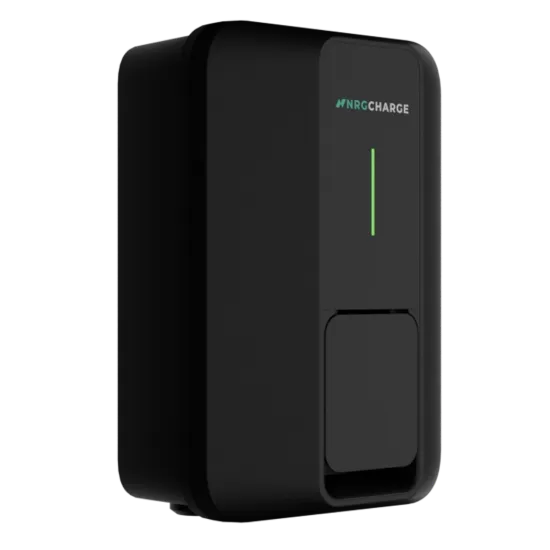
Single phase, standard connectivity
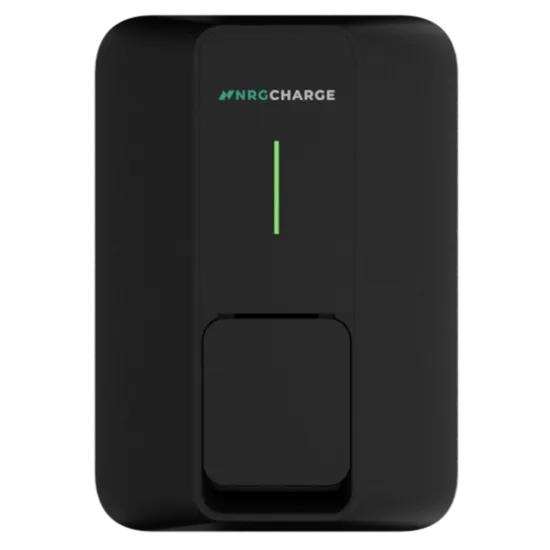
Single phase with mobile connectivity
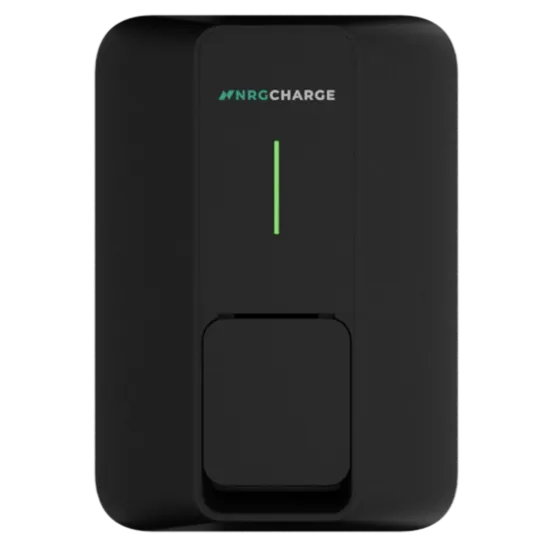
Three phase, standard connectivity
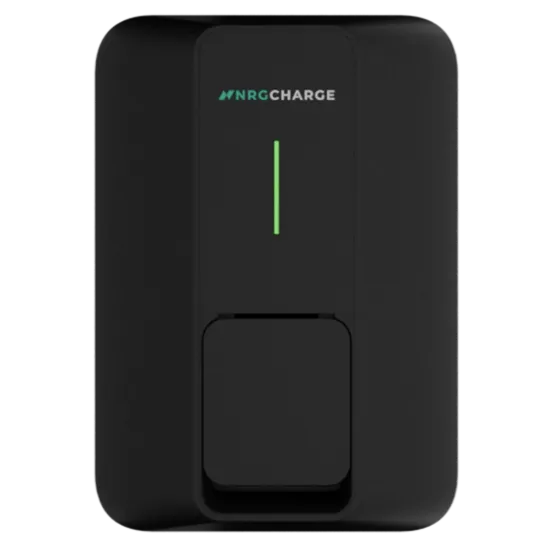
Three phase with mobile connectivity
7kW or 22kW: which power should you choose?
The power decision is governed by the property supply and the vehicle's onboard AC charger. A higher number on the wallbox does not guarantee that every car will charge at that rate.
Choose 7kW for most single-phase homes
The 7kW Velox models operate from a 230V single-phase supply at up to 32A. This is the normal starting point for a UK domestic charger because most homes have a single-phase electrical connection. It gives a meaningful improvement over charging from a standard domestic socket and is suitable for routine overnight charging when correctly specified and installed.
A 7kW model is usually the sensible choice when:
- the property has a single-phase supply;
- the vehicle accepts single-phase AC charging;
- charging will mainly happen overnight or during off-peak periods;
- one vehicle normally uses the charger;
- there is no confirmed requirement for three-phase charging.
Choose 22kW only after confirming three-phase capability
The 22kW Velox models require a 400V three-phase supply. They can suit workplaces, commercial premises, shared parking areas and homes that genuinely have three-phase power. Before choosing one, an electrician should confirm the supply, available capacity, cable route, protective arrangements and load-management requirements.
The vehicle matters too. Some EVs accept 11kW three-phase AC, some can accept 22kW, and others remain limited to a lower single-phase rate. A 22kW charger can only deliver what the installation, load-management setting, charging cable and vehicle can all support. If the car accepts 11kW AC, connecting it to a 22kW wallbox will not turn it into a 22kW charge.
That does not make the larger charger pointless. It may still be chosen for a site serving different vehicles, for future fleet requirements or because three-phase capacity is already available. It simply means the decision should be based on the whole installation rather than the wallbox rating alone.
Do you need the NRG Charge Velox 4G version?
The standard and 4G products should not be viewed as basic and smart versions. All four are smart chargers. The practical question is how the charger will communicate at the installation site.
The standard models support local connectivity including Wi-Fi, Bluetooth and LAN. They are a good fit where the charger can use a dependable home or business network. The 4G models add mobile connectivity, which can be valuable where the parking position is beyond reliable Wi-Fi coverage, running a network cable is difficult, or the operator wants another communication route.
Standard connectivity
Start here when Wi-Fi or LAN is reliable at the charge point and the local network arrangement is straightforward.
4G connectivity
Consider 4G for detached parking, remote bays, shared sites or locations where dependence on the building's network is undesirable.
Mobile reception should still be checked at the intended mounting position. A 4G charger cannot create a strong signal where network coverage is poor. Conversely, there is little reason to choose 4G solely because it sounds more advanced if the charger will sit beside a reliable router or a planned LAN connection.
What does socketed or untethered mean?
Every current NRG Charge Velox sold by LAMPS has a Type 2 socket rather than a permanently attached charging cable. The driver connects a separate Type 2 cable between the charger and vehicle.
A socketed charger keeps the wall unit visually tidy when it is not in use and allows the cable to be removed for storage or replacement. It can also make sense where different cable lengths may be useful over the life of the installation. The trade-off is that the driver must take out and connect the cable each time, then store it securely afterwards.
Before ordering, check that the vehicle has a Type 2 AC inlet and that a suitable cable of the correct rating and length is available. The 22kW models also require a cable suitable for the intended three-phase charging rate if that output is to be used.
Smart charging, RFID and scheduled charging
The Velox supports three everyday operating approaches: app control, RFID authorisation and plug-and-charge. The best mode depends on who uses the charger and how much access control is required.
- App control: suitable when the user wants remote session control and scheduling through the supported charging app.
- RFID: useful when charging should begin only after an authorised tag is presented. Two RFID key fobs are supplied.
- Plug-and-charge: the simplest arrangement where the charger should begin automatically after the vehicle is connected.
Scheduled charging can help move demand into a preferred charging window, including an off-peak tariff period. The vehicle and charger schedules should be coordinated rather than setting conflicting timers in both places. If delayed charging is used, the vehicle must remain ready to accept power when the scheduled period begins.
The charger also supports OCPP 1.6J. For a business or managed site, compatibility with the intended back-office or operating arrangement should be confirmed before procurement; the presence of OCPP support does not replace that project-specific check.
Dynamic load balancing and solar charging
Dynamic load balancing is one of the most important installation features in the range. A current transformer, normally shortened to CT, monitors electrical demand and allows the charger to adjust its output so it does not blindly compete with the rest of the property.
Consider a home where the oven, heat pump and other high-load equipment are already operating. Instead of continuing at maximum output regardless of total demand, a correctly commissioned charger can reduce its charging current to help keep the installation within its configured limit. The available charging rate can increase again as the other loads fall.
The 7kW installation uses a single-phase grid CT arrangement. The 22kW model uses three current sensors for three-phase monitoring. Correct CT orientation, wiring and commissioning are essential; these are installer tasks rather than settings that should be guessed after installation.
Using surplus solar generation
Velox can also be configured to respond to solar PV generation when the additional solar-monitoring CT is fitted and correctly commissioned. The charger can combine available solar energy with grid power so that charging can continue above the minimum current an EV normally requires.
For example, if the car needs roughly 1.4kW to maintain a charging session but the solar array is producing only 1kW at that moment, the system can supplement the solar contribution from the grid rather than stopping the session. The exact behaviour depends on the selected configuration and live site conditions.
Solar charging should be designed around the inverter connection, CT position and required operating mode. It is not simply enabled by owning solar panels; the monitoring hardware and commissioning arrangement must be present.
Modular construction and protection
The Velox uses a three-part construction. The back box contains the fixed wiring connections, the electronic body connects to it, and the fascia clips over the front. This arrangement can simplify first-fix work and future component replacement because the installed wiring and the main electronics are separated.
The enclosure measures approximately 255mm high, 180mm wide and 105mm deep. It is rated IP54 for protection against dust and water ingress and IK10 for resistance to mechanical impact. The documented operating range is -30 degrees C to +50 degrees C, subject to the installation conditions and manufacturer instructions.
Electrical protection includes a built-in Type A 30mA residual-current arrangement with 6mA DC detection, together with monitoring for conditions including overcurrent, overvoltage, undervoltage, ground faults and overtemperature. The final circuit design, upstream protection and verification still remain the responsibility of the qualified installer under the applicable wiring requirements.
The current products are supplied with a standard three-year warranty. Installation, commissioning and any warranty registration requirements should be completed in accordance with the manufacturer instructions.
Choosing an NRG Charge Velox fascia colour
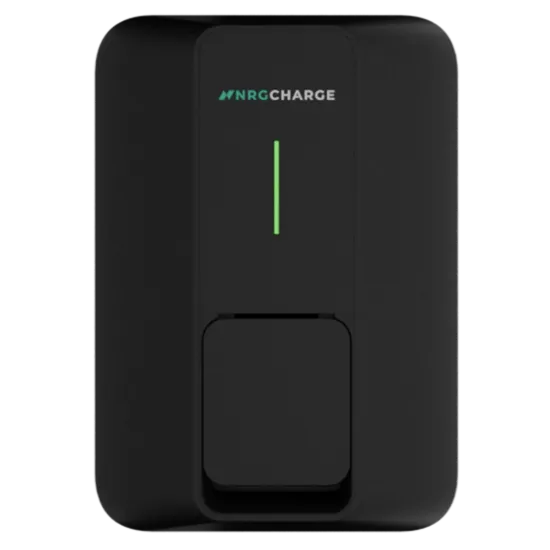
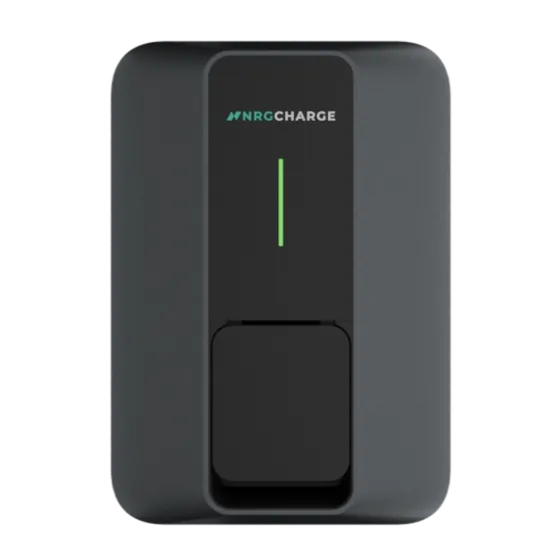
The chargers are supplied in Black. Four separate front fascias let the visible finish be changed without selecting a different electrical model: Sage Green, Pure White, Sapphire Blue and Anthracite Grey. Choose the charger for its power and connectivity first; choose the fascia afterwards.
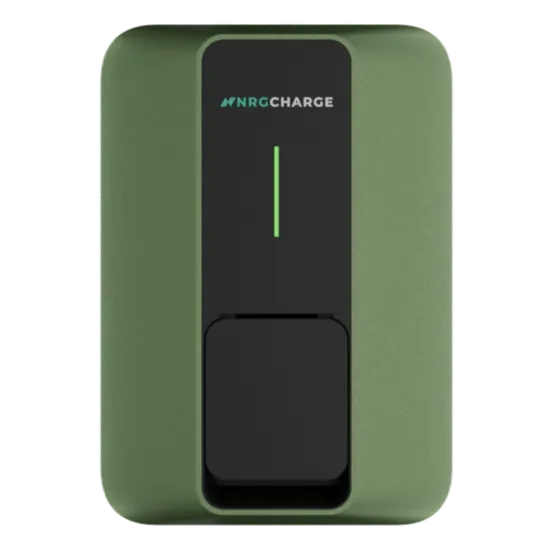
A softer finish for landscaped or design-led settings
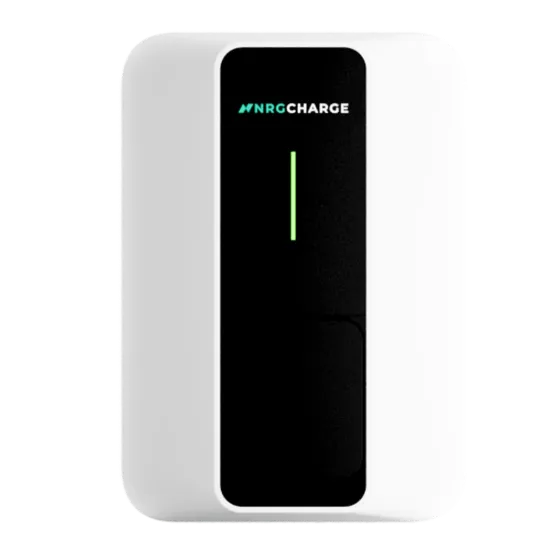
A clean match for pale render and modern entrances
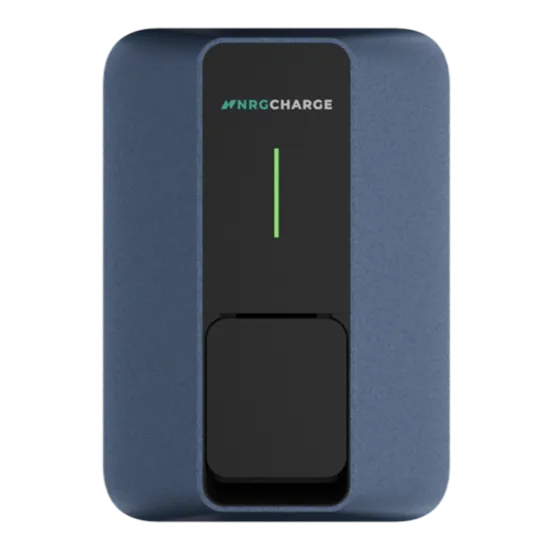
A stronger colour accent for a visible installation
A restrained option for dark frames and contemporary exteriors
Because the covers are separate accessories, their availability should be checked independently from the charger. The standard Black finish remains a complete option without an additional fascia.
Which NRG Charge Velox should you buy?
For a typical home with reliable Wi-Fi
Start with the NRG Charge Velox 7kW. It matches the single-phase supply found in most homes and avoids paying for a connectivity option that may not be needed.
For a home where the parking space has weak Wi-Fi
Consider the NRG Charge Velox 7kW 4G, provided mobile coverage is suitable at the mounting position. Discuss Wi-Fi, LAN and 4G options with the installer before deciding.
For a three-phase workplace or shared site
Consider the NRG Charge Velox 22kW after confirming the available supply capacity and the vehicles' AC charging capabilities. The non-4G version is the natural starting point where managed networking is already available.
For a three-phase site that also needs mobile connectivity
The NRG Charge Velox 22kW 4G combines the highest output in this range with the added mobile connection option. It should still be assessed as part of the site's electrical and communications design.
Installation points to check before ordering
An EV charger is part of a fixed electrical installation. A qualified and competent electrician should survey, install, test and commission the unit in accordance with the current requirements and the NRG Charge instructions.
- Supply type: confirm single phase or three phase before selecting 7kW or 22kW.
- Available capacity: assess the existing property load and the required dynamic load-management settings.
- Vehicle capability: check the maximum AC charging rate and whether it is single phase or three phase.
- Cable route: consider distance, voltage drop, entry position and appropriate cable sizing.
- Connectivity: test Wi-Fi and mobile reception at the actual charger position and assess whether LAN is practical.
- Solar integration: identify the inverter output and plan the additional CT arrangement if solar monitoring is required.
- Charging cable: select a compatible Type 2 cable with the required length and current rating.
- Mounting position: allow convenient access to the socket while avoiding cable trip hazards and vehicle damage.
Download the NRG Charge documents
- NRG Charge Velox datasheet (PDF)
- NRG Charge Velox installation manual (PDF)
- NRG Charge Velox configuration quick-start guide (PDF)
For the full range, specifications and compatible front covers, visit the NRG Charge brand page at LAMPS.
Frequently asked questions
Is the NRG Charge Velox tethered or untethered?
The current 7kW and 22kW Velox models sold by LAMPS are untethered, also called socketed. They have a Type 2 outlet and require a separate charging cable.
Can I install a 22kW Velox at home?
Only where a suitable three-phase supply and sufficient capacity are available. The vehicle must also support three-phase AC charging to benefit from the higher output. An installer should verify both the property and vehicle requirements before the charger is selected.
Will a 22kW charger charge every EV at 22kW?
No. The real rate is limited by the vehicle's onboard AC charger, the electrical supply, the charging cable and any configured load-management limit. Many vehicles accept less than 22kW on AC.
What is the difference between the standard and 4G Velox?
The charging power and socket format remain the same within each 7kW or 22kW pair. The 4G version adds mobile connectivity alongside the local communication options. It is intended for sites where that additional connection is useful.
Does NRG Charge Velox support solar charging?
Yes, the charger can be configured to respond to solar generation when the required additional CT monitoring is installed and commissioned correctly. Solar ownership alone is not enough; the monitoring arrangement must be part of the installation.
Does the charger include dynamic load balancing?
The range supports CT-based dynamic load balancing. The installer must fit, orient and configure the appropriate current sensors for the supply and commissioned operating limit.
Can the fascia colour be changed later?
The front cover is a separate part of the modular assembly, and alternative Sage Green, Pure White, Sapphire Blue and Anthracite Grey fascias are available separately. Check current compatibility and availability before ordering.
Can Velox be installed outside?
The enclosure is rated IP54 and IK10 and is intended for suitable indoor or outdoor locations. The installer must follow the environmental, mounting and ventilation requirements in the manufacturer documentation.
Does it work without the app?
The charger supports RFID and plug-and-charge modes as well as app control. The selected operating mode should be configured during commissioning to match the required access and scheduling arrangement.
What warranty does NRG Charge Velox have?
The current range is supplied with a standard three-year warranty. Follow the manufacturer instructions for installation, commissioning, registration and permitted servicing so the warranty conditions are maintained.