







Solar Lighting for Golf Courses: Street Lights and Bollards
Last updated: 14 April 2026
Solar lighting can be a practical option for golf courses that need to light pathways, clubhouse approaches, car parks, estate roads and other outdoor areas without the disruption of trenching and new mains cabling. For many golf clubs, the real benefit is not just lower ongoing electricity use, but the ability to improve lighting across a large site without having to run power to every fitting position.
For golf club managers, the key is choosing the right type of solar lighting for the right part of the site. In simple terms, solar bollards are often best for lower-level wayfinding and landscaped routes, while solar street lights are better for wider access routes, car parks and larger external areas. At LAMPS, that usually means looking at the Omnisolar Pace Solar Lighting Range for bollards and lower-level fittings, then the Omnisolar Vista Solar Street Light Range and Omnisolar Venus Pro Solar Street Light Range for higher-output street lighting.
Why golf courses are a strong fit for solar lighting
Golf clubs are often spread across large outdoor spaces with a mix of practical and presentation-led lighting needs. You may need safer pathways between clubhouse and car park, better guidance on buggy routes, more usable lighting around entrances, or cleaner lighting around landscaped areas and estate-style roads. On many sites, running mains power to all of those locations can be costly, disruptive or simply awkward.
That is where solar lighting becomes attractive. It can help golf clubs improve visibility and wayfinding in the right places without treating the whole site like a conventional mains-led lighting project. It can also be useful on sites where preserving appearance matters and where unnecessary groundwork is best avoided.
Where solar bollards work best on a golf course
Solar bollards are often the better fit where the goal is lower-level guidance rather than broad-area lighting. On golf sites, that usually means places such as clubhouse approaches, pedestrian routes, paths between key buildings, landscaped edges, terrace approaches, estate-style entrances and other areas where appearance matters just as much as function.
That is why the Pace range is so relevant for golf clubs. It gives you a family of coordinated fittings rather than one isolated product, which is useful if you want a more consistent look across different outdoor areas.
Why Pace is a good bollard option for golf clubs
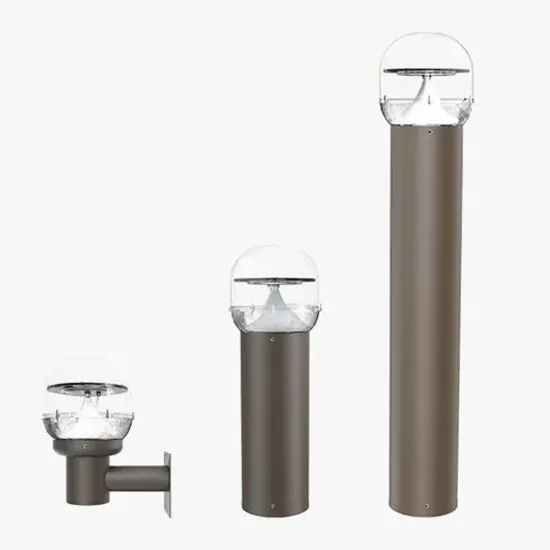
The Omnisolar Pace Solar Lighting Range is built around 360° sunlight auto-tracking, Bluetooth networking, app control and auto-power saving. Across the uploaded Pace bollard sheets, the Pace-01, Pace-02 and Pace-03 all use warm-white 3000K lighting, are positioned as winter-ready products and list 10-day rainy-period performance. That makes them useful for golf clubs that want solar lighting to look smart, work reliably and avoid the feel of a basic utility fitting.
The three bollard heights also give clubs a bit more flexibility. Pace-01 is the shorter option, Pace-02 sits in the middle, and Pace-03 is the taller bollard for areas where a more visible fitting makes sense. All three keep the same core design language, which is useful when a club wants the site to feel considered rather than pieced together.
Where solar street lights work best on a golf course
Bollards are not the answer everywhere. On golf sites, there are plenty of areas where a higher-output fitting is the better choice. That can include access roads, wider pedestrian routes, buggy routes, car park edges, overflow parking areas, perimeter roads and larger circulation spaces around the clubhouse or estate buildings.
In these areas, a solar street light will often be more suitable than a bollard because the goal is broader coverage and stronger practical visibility. That is where Vista and Venus Pro come in.
When Vista makes sense
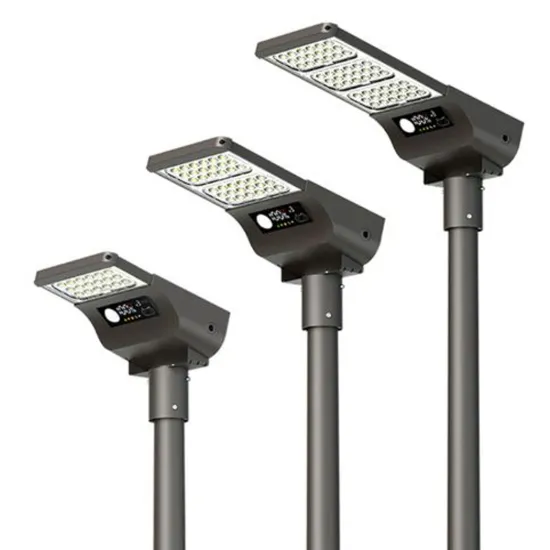
The Vista range is the more control-led option. It includes rain-sensing technology, CCT switching, personalised lighting modes, LED display information and compatibility with standard street-light poles. For golf clubs, that makes Vista a sensible starting point for routes and areas that need smarter operation without stepping straight into the highest-output specification.
When Venus Pro makes sense
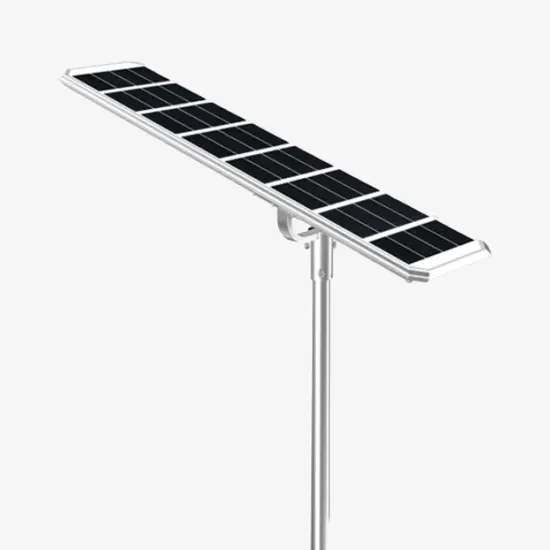
The Venus Pro range is the stronger option for larger-scale or more demanding areas. If a club is looking at roads, larger car parks, wider site routes or more exposed external areas, Venus Pro is usually the better range to review first. It is the higher-output family and is positioned around more substantial site lighting.
Why a mixed approach often works best on golf sites
For many golf clubs, the best answer is not choosing bollards or street lights, but using both in the right places. Bollards can help with lower-level wayfinding and the overall feel of the site around the clubhouse and landscaped areas. Street lights can then take over where broader coverage and stronger visibility are needed.
That kind of split often feels more natural on golf courses than trying to use one fitting type for everything. It also helps clubs balance appearance, practicality and project cost more effectively.
What golf club managers usually care about most
In most cases, the questions are not especially complicated. Golf clubs usually want to know whether the lights will work in winter, whether they will perform through poor weather, whether installation will be simpler than a mains-led scheme, and whether the finished result will actually suit the look of the site.
That is one reason the Omnisolar range is useful. Pace is clearly more design-conscious for lower-level lighting, while Vista and Venus Pro cover the practical street-lighting side. Together, that gives golf clubs a much more usable range of options than a one-product approach.
Do solar lights work on golf courses in winter?
They can, provided the site and product are suitable. The Pace sheets all position the range as working in winter and list heated battery technology, while the Vista and Venus Pro materials also carry winter-ready positioning. That does not mean every model suits every application, but it does mean the range is built with UK outdoor use in mind rather than only fair-weather installations.
As always, the right question is not whether solar works in theory, but whether the chosen fitting is right for the location, output requirement and operating pattern. A clubhouse path, a landscaped edge and a car park do not all need the same product.
Why solar can be attractive on larger golf sites
Golf clubs often have long routes, separate buildings, landscaped approaches and wide external areas. Where those areas would need new cabling, trenching and reinstatement, solar can become attractive because it may reduce the amount of infrastructure needed to get useful lighting in place.
That does not mean solar is automatically the best option everywhere. Heavy shading, demanding lighting levels or very specific project requirements may still point towards a mains-powered scheme in some locations. But on the right part of the site, solar can be a practical and visually cleaner option.
Which Omnisolar range should a golf club start with?
Start with Pace if the project is focused on bollards, lower-level pathway lighting, clubhouse approaches or other more presentation-led areas.
Start with Vista if the project needs smarter solar street lighting for routes, paths or lower-to-mid scale external areas.
Start with Venus Pro if the brief involves stronger output for roads, larger routes or broader external coverage.
View Omnisolar solar lighting at LAMPS
If you are reviewing lighting around a golf course, clubhouse or estate-style site, start with the Pace range for bollards and lower-level fittings, then compare the Vista range and Venus Pro range for higher-output street lighting.
You can also read our existing article on EV charging and solar for golf clubs, or contact LAMPS if you want help choosing a suitable starting point.
Frequently asked questions about solar lighting for golf courses
Are solar bollards a good fit for golf courses?
Yes, they can be a very good fit for clubhouse approaches, pedestrian paths, landscaped edges and other areas where lower-level guidance is more important than broad-area lighting.
Are solar street lights better than bollards for golf clubs?
Not always. Bollards and street lights do different jobs. Bollards are usually better for lower-level wayfinding and visual finish, while street lights are better for wider routes, car parks and larger external areas.
Which Omnisolar product is best for clubhouse approaches?
For many golf clubs, the Pace range is the best place to start because it is more suited to lower-level pathway and approach lighting, with coordinated bollard, post-top and wall-mounted options.
Do Pace solar bollards work in winter?
The uploaded Pace sheets position the range as working in winter and list heated battery technology, so they are clearly designed with UK outdoor conditions in mind.
How long can Pace lights operate through poor weather?
The uploaded Pace sheets list 10 days of lighting for rainy periods across the range, which is a useful resilience point for golf clubs comparing solar options.
Can Pace lights be controlled by app?
Yes. The uploaded Pace materials list app control and Bluetooth networking across the range.
What warranty does the Pace range have?
The uploaded Pace sheets show a 3-year warranty.
Can golf clubs use both bollards and solar street lights on the same site?
Yes, and that is often the most sensible approach. Bollards can cover paths, entrances and landscaped areas, while street lights can cover roads, parking areas and wider site routes.
What is the difference between Pace, Vista and Venus Pro?
Pace is the lower-level solar lighting family for bollards, wall-mounted and post-top fittings. Vista is the more control-led street-lighting range. Venus Pro is the higher-output street-lighting range for larger or more demanding areas.