







7kW vs 22kW EV Chargers: Which Do You Need in the UK?
Last updated: 17 July 2026
Quick answer: for most UK homes, a 7kW EV charger is the right choice because it works with the property's usual single-phase electricity supply and can comfortably recharge an EV overnight. A 22kW EV charger needs a suitable three-phase supply, and the vehicle must support three-phase AC charging to use the full output. A 22kW badge does not guarantee that every car will charge three times faster.
The useful question is not simply which charger has the larger number. It is which combination of property supply, vehicle onboard charger, available electrical capacity and parking pattern will deliver the result you need. This guide works through that decision without assuming that more power is automatically better.
The practical difference between 7kW and 22kW charging
A nominal 7kW home charger is normally a 32A single-phase AC charge point. You may also see the output written as 7.2kW or 7.4kW; those labels describe the same broad class of domestic charger, with the exact figure depending on the stated voltage and product specification.
A 22kW AC charger uses three phases, normally at up to 32A per phase. That can deliver roughly three times the electrical power of a 7kW unit, but only when the property, circuit, charger configuration, cable and vehicle all support it. If one part of that chain has a lower limit, charging takes place at the lower rate.
| Question | 7kW charger | 22kW charger |
|---|---|---|
| Typical supply | 230V single phase | 400V three phase |
| Typical maximum current | 32A on one phase | 32A on each of three phases |
| Common setting | Homes and small workplaces | Three-phase homes, workplaces and commercial sites |
| Main limitation | Available single-phase capacity | Three-phase supply and vehicle AC acceptance |
Start with the property: single phase or three phase?
Most UK homes have a single-phase supply. In that setting, a 7kW charger is usually the natural ceiling for dedicated AC vehicle charging. The installer still needs to assess the service head, main fuse, earthing arrangement, consumer unit, cable route and the property's existing demand before specifying the circuit.
Three-phase supplies are common in commercial buildings and may be present in larger, converted or purpose-built homes. Their presence does not by itself mean that 22kW is available without restriction. The installer must confirm spare capacity, phase loading and the distribution network requirements for the proposed installation.
Upgrading a domestic property from single phase to three phase is a network and installation project, not a charger setting. If the only reason for considering that work is to reduce an overnight charge from several hours to fewer hours, the cost and disruption may be hard to justify. It can make more sense where three phase is already needed for heat pumps, machinery, solar and battery systems, multiple chargers or other major loads.
The vehicle decides how much AC power it can accept
An AC charge point supplies controlled AC power; the vehicle's onboard charger converts that power for the battery. The onboard charger has its own maximum rating. A car that accepts only single-phase 7kW AC will normally take about 7kW even when connected to a 22kW AC post. A car with an 11kW three-phase onboard charger will normally take up to 11kW from the same 22kW unit.
This is separate from the much larger DC rapid-charging figure advertised for many vehicles. DC rapid chargers bypass the car's onboard AC charger and feed the battery through a different charging path. A vehicle described as capable of 100kW DC charging is not necessarily capable of 22kW AC charging.
Check the vehicle's maximum AC charging rate, whether it accepts one or three phases, and whether that rate is standard on your exact model and year. For a household likely to change vehicles, choosing a charger with broader capability can provide flexibility, but the electrical installation still has to support the configured output.
How to estimate an EV charging time
A useful first estimate is:
Energy to add in kWh divided by the actual charging rate in kW = approximate hours
Suppose a driver needs to add 42kWh. At an actual 7kW, the simple calculation is about six hours. At 11kW it is just under four hours, and at 22kW it is just under two hours. Real sessions can take longer because charging is not perfectly lossless, the vehicle may regulate power, the charger may be load-limited and battery conditions can affect the session.
Use the energy you expect to replace, not always the battery's total advertised capacity. A driver returning home with 45% remaining and leaving at 80% is filling a much smaller portion of the battery than someone charging from nearly empty to full. This is why 7kW is sufficient for many homes even as vehicle batteries become larger.
Which charger output is best for a home?
Choose 7kW as the starting point when the property has a normal single-phase supply, the car is parked for several hours at a time and charging can be scheduled overnight. That describes the majority of home installations. It also leaves you with the widest choice of domestic products, including tethered and socketed designs, tariff-led apps, solar-aware models and decorative finishes.
Consider 22kW at home when all of the following are true:
- A suitable three-phase supply is already present or justified for the wider property.
- The proposed circuit has enough assessed capacity.
- The current or likely future vehicle supports useful three-phase AC charging.
- Shorter dwell times create a real need to replenish energy faster.
- The installer and distribution network process support the design.
If those conditions are not met, a 22kW-capable charger may simply operate at a lower configured output. That can still be a valid future-planning decision, but it should be understood before money is committed.
When does a 22kW charger make sense commercially?
Workplaces, depots, hospitality venues, residential developments and shared car parks have different dwell times and user patterns. A 22kW AC charger is strongest where vehicles arrive with a meaningful energy deficit, stay for perhaps one to several hours, and can accept three-phase AC power. It can also be a sensible standard for a site that already has three-phase distribution and wants flexibility across a changing vehicle fleet.
Power per socket is only one part of a commercial design. A site with finite capacity may serve more drivers effectively with several load-managed outlets than with fewer outlets all attempting to draw maximum power. Access control, RFID, app or back-office operation, payment requirements, reporting, connectivity, maintenance and physical protection can matter more than the difference between 11kW and 22kW.
Load balancing, solar and smart charging still matter
Dynamic load balancing monitors demand and can reduce the charger's draw when the property is using more electricity elsewhere. It does not manufacture additional capacity, but it can help the charging system operate within an assessed limit. For a home, that may mean the car temporarily charges more slowly when cooking or heating loads are high, then increases later. For a multi-charger site, power can be allocated across connected vehicles according to the chosen system.
Solar charging is also a control question, not merely a charger output question. A compatible charger, meter or CT arrangement may vary charging to use available surplus generation. Because domestic solar output changes with weather and household demand, the car may charge below 7kW for long periods. A 22kW label does not make a typical domestic array produce more surplus.
Private domestic and workplace charge points sold in Great Britain are covered by smart-charge-point requirements, including smart functionality and default off-peak scheduling. The practical features differ by manufacturer, so compare tariff integration, scheduling, connectivity and what continues to work if an internet connection is unavailable.
Current 7kW and 22kW charger options
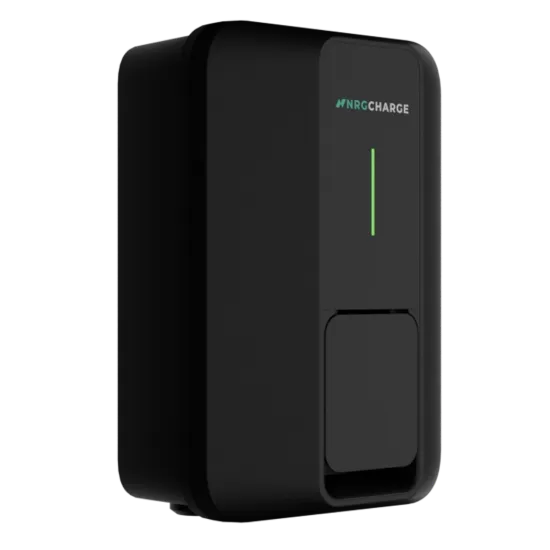
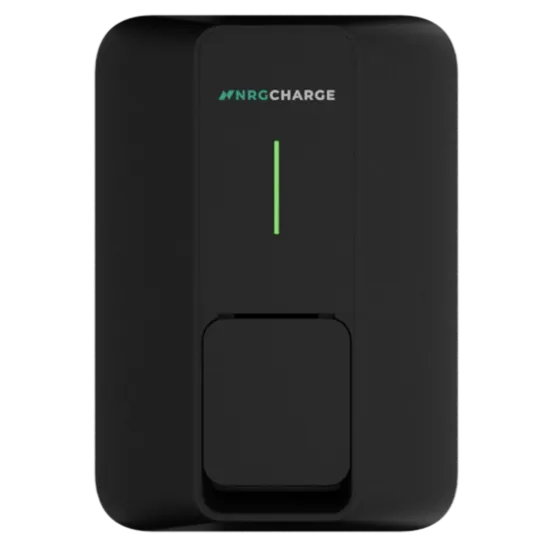
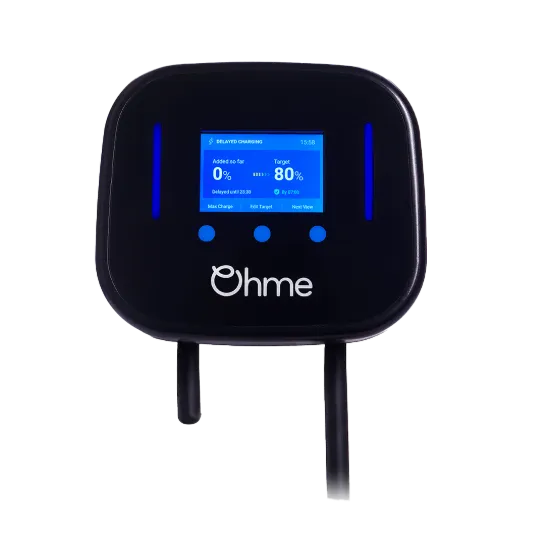
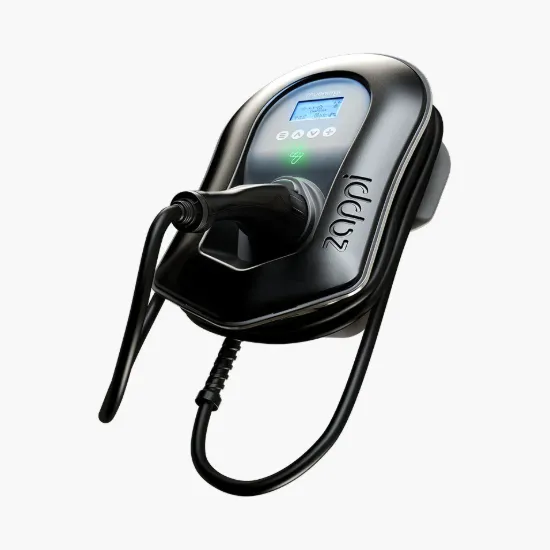
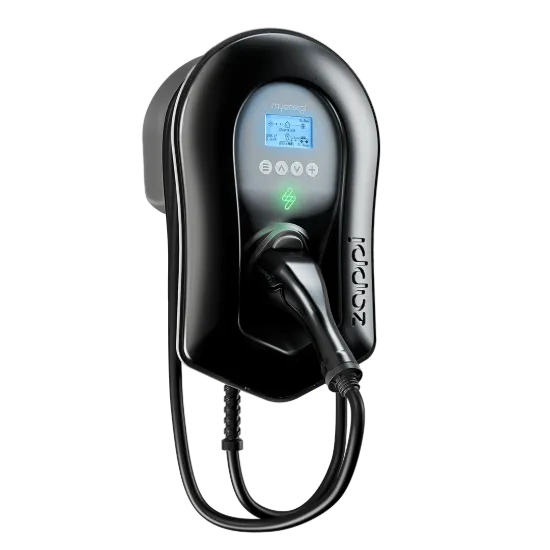
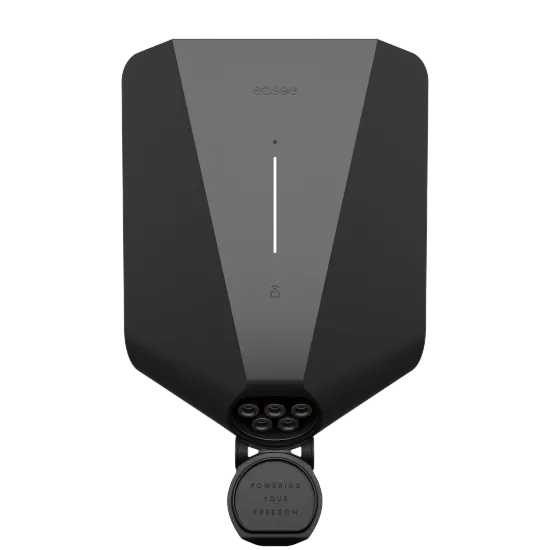
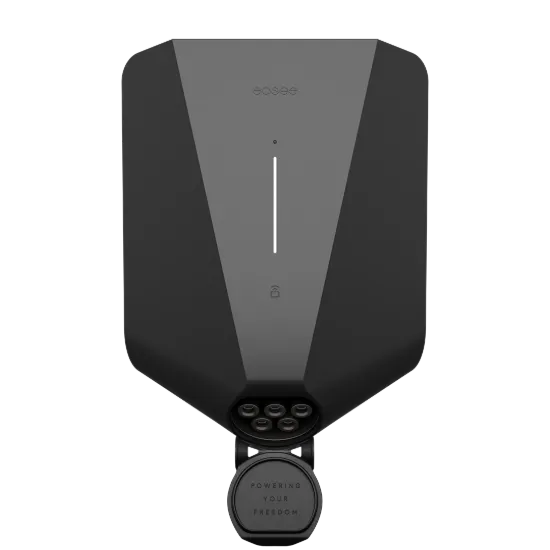
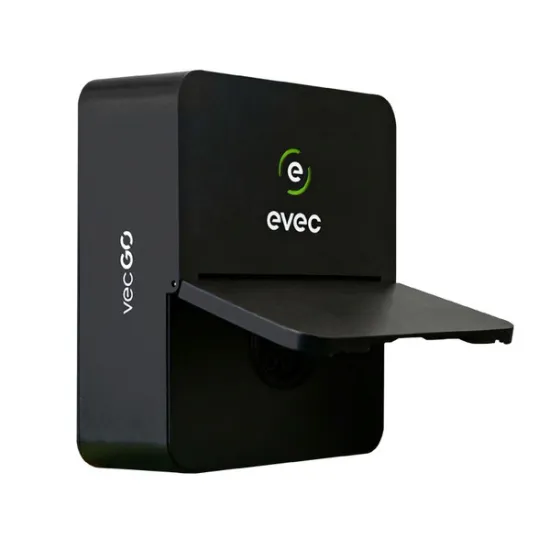
The best comparison is often within a single product family because the enclosure and software remain similar while the supply changes. The NRG Charge Velox, myenergi zappi, Easee and evec ranges all provide useful routes into single-phase and three-phase charging. The Andersen range adds a design-led option, while Ohme focuses strongly on the 7kW domestic use case.
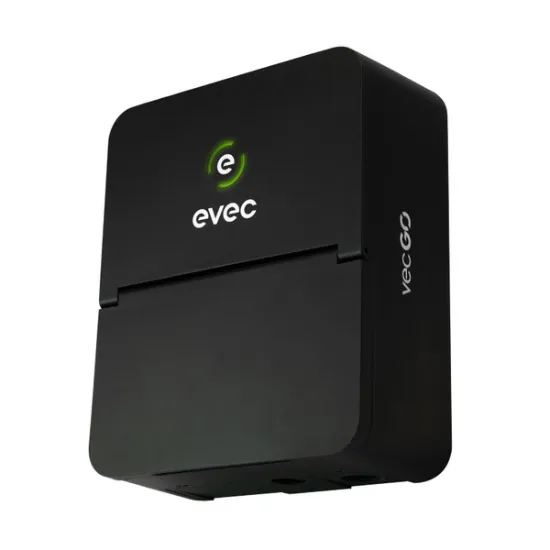
Do not compare the headline output alone. Decide whether you want a fixed cable or a Type 2 socket, then check load balancing hardware, solar functions, network method, app requirements, access control, warranty and the electrical protection expected by the manufacturer. For a deeper look at cable choice, see our tethered vs untethered EV charger guide.
Why the new NRG Charge range caught our attention
NRG Charge is a useful example of how to make the 7kW-versus-22kW decision straightforward. Its Velox line has four socketed models: 7kW and 22kW, each available with standard local connectivity or with 4G added. The charger is supplied in Black, with four separate front fascias allowing an installer or customer to change the visible finish without choosing a different electrical model.
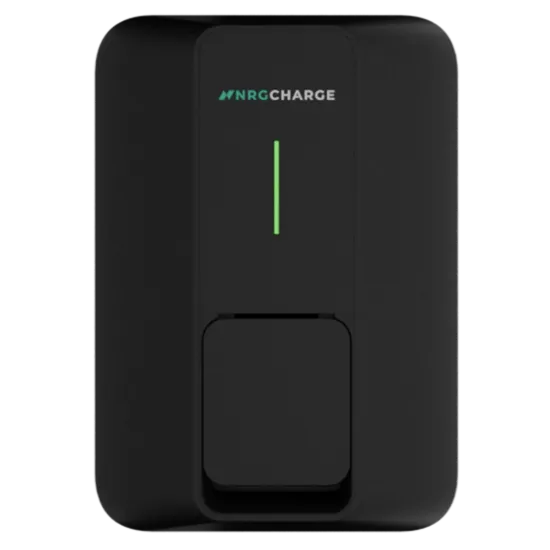
There is also real EV-industry experience behind it. Craig Slater, now an NRG Charge director, joined Andersen EV as Head of Sales in 2024 after senior roles with Sevadis, Pod Point and Rolec. We sat down with Craig and handled the finished product ourselves. Our honest first impression was that the charger looks and feels properly considered: the enclosure, fascia fit and overall substance do not give the lightweight, cost-cut impression that can accompany a value-led product.
That matters for installers. A competitively positioned charger still has to be something you are comfortable fitting on a customer's wall and putting your name behind. The NRG proposition is not luxury pricing for its own sake; it is a design-aware, installer-conscious product at a more accessible point in the market. Read our full NRG Charge Velox guide for the four-model comparison, 4G decision and fascia options.
Your final 7kW or 22kW checklist
- Confirm the supply. Is the property single phase or three phase?
- Check available capacity. What can the installation support after the existing load is assessed?
- Check the vehicle. What is its maximum AC rate and how many phases can it use?
- Define the use case. Overnight at home, several hours at work, or short commercial stays?
- Decide cable format. Tethered convenience or socketed flexibility?
- Plan connectivity. Wi-Fi, Ethernet or 4G, and what happens when the connection drops?
- Specify controls. Dynamic load balancing, solar integration, scheduling, RFID or payment?
- Use the right installer. The charger is one component of a designed, tested and notified electrical installation.
Bottom line: 7kW is the sensible default for most UK homes. Choose 22kW where three-phase power is genuinely available, the vehicles can use it and faster AC turnaround has operational value. If you are unsure, start with a site and vehicle assessment rather than a product badge.
Compare home EV chargers or browse commercial EV chargers. LAMPS can also help installers and project buyers narrow the range around supply, connectivity and operating requirements.
Common questions
Can I install a 22kW EV charger on a single-phase supply?
Not at its full 22kW output. Full 22kW AC charging normally requires a suitable three-phase supply. Some 22kW-capable products can be configured at a lower output, but the design must follow the manufacturer's instructions and the assessed installation.
Will a 22kW charger charge every EV faster than a 7kW charger?
No. The car's onboard AC charger sets its acceptance limit. A vehicle limited to about 7kW single phase will not take 22kW simply because it is connected to a 22kW charge point.
Is 7kW enough to charge an EV overnight?
For many drivers, yes. At roughly 7kW, a six-hour session can theoretically supply around 42kWh before allowing for losses and power management. The right calculation uses the energy normally replaced each night, not automatically the battery's full capacity.
Is an 11kW charger a middle option?
Yes, where a suitable three-phase supply and compatible vehicle are available. Many 22kW charge points can be configured to a lower three-phase current, while some vehicles accept a maximum of 11kW AC. The installer should coordinate the charger, vehicle needs and site capacity.
Do I need permission for an EV charger?
The electrical and network process depends on the proposed load and local circumstances. Your installer should assess whether the installation follows a connect-and-notify route or needs distribution network approval before connection, and should handle the relevant notification and certification.